Spring Flowering Bulbs
It’s that time of year to think about what bulbs you might want to plant in your garden this Fall. Spring Flowering bulbs are planted in the Fall and are some of our earliest flowering plants that go well into early Summer. They add important color when nothing else is happening. The even better part is they come back every year and many will expand their footprint over time, and they are inexpensive. Yes, some are Rabbit, Squirrel/Chipmunk food, but most are left untouched. I encourage you to peruse the following online suppliers: John Scheepers and Brent and Becky’s. Don’t wait as many popular and special bulbs will be gone soon. Following are a few of my favorites not favored by critters:
- Camassia – Beautiful tall spikes in late Spring
- Chionodoxa – One of the earliest in March/April. In big clumps has great impact.
- Fritillaria melagris – This specific Fritillaria is my absolute favorite. I need to add more.
- Puschkinia scilloides – Another early that spreads. Plant in large groups.
- Jonquill Daffodils – Smaller Dafs that seem to better fit smaller borders and gardens. Naturalize well.
If you want some help developing a plan, don’t hesitate to reach out.
Fireflies
Where have all the Fireflies gone? We called them Lightening Bugs in the Midwest, and I remember putting them in jars with a twig and grass and putting them next to my bed as I fell asleep. As with many of the insects we are losing, it comes down to habitat and chemicals. The rise of the chemical lawn treatments in the 70s did tremendous damage, as well as the current trend of contractors removing every spec of organic matter not nailed down. This is a great article from the Homegrown National Park on their benefit and how you can bring them back. Best practice is to leave the leaves in some areas of your garden and to stop using insecticides, or any broadcast activity to remove insects. If you really want to dig in, you can go to Firefly.org.
Checkerspot Farm
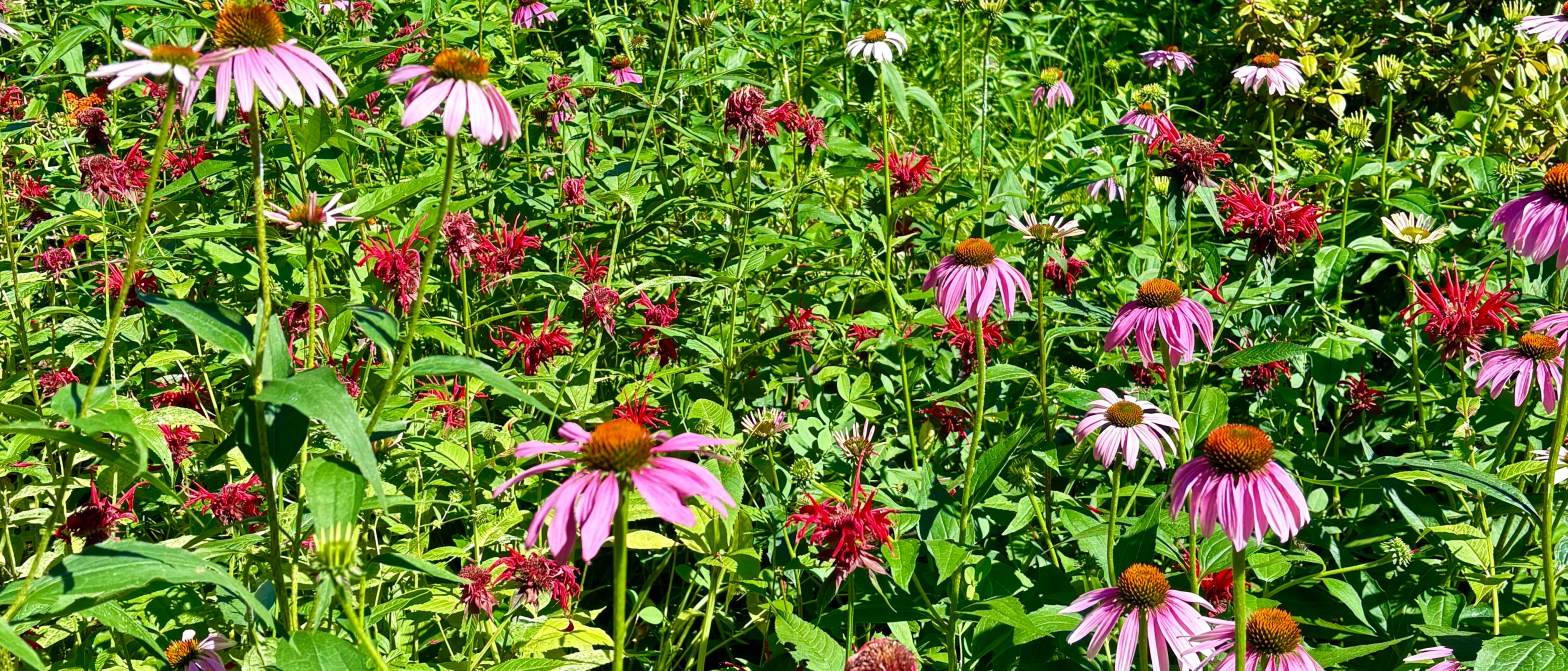
I am making an effort to visit the native only nurseries around New England this year. Most have been in business for less than a decade, and many for just a few years. You will find them knowledgeable and willing to talk and help with plant choices. I visited Checkerspot Farm in Colrain, MA, just north of Greenfield in central MA, last week to get some plants for a job. Jocelyn, the owner, was kind enough to show me around and talk about her journey. I was impressed with the quality of her plants, typically in smaller pots, and the breadth of her offerings. She has a spreadsheet of plants she grows on her site, but it does not reflect what is in stock at a given time. She has a beautiful meadow (below) with all of her plants, from which she harvests seed and grows.
Well worth a visit to central MA at the foothills of the Berkshires. Visit Shelburne Falls and the Bridge of Flowers, Turners Falls or Greenfield. Lunch and shopping will make for a nice summer roadtrip. Please consider supporting these small nurseries that are doing amazing work to support the growing native plant movement. Go to Grow Native Massachusetts for a list of small, native nurseries.

New York Times Feature on Doug Tallamy
I have been talking about Doug Tallamy and the Homegrown National Park for a number of years. He and his organization are an incredible resource for information and ideas about rebuilding our native plant/animal/insect ecosystems. The added benefit is that they don’t shame or criticize but offer ideas and support for making changes in the way we plant and garden. A New York Times writer visited his Pennsylvania property for several days and wrote an extensive feature on his visit. This link takes you to a summary of the article, that contains a link to the full feature. The writer doesn’t pull punches and it is a great insight into the debate surrounding the native plant movement.
If you want to subscribe for free to my more detailed newsletter, please go to the following link: The Barker, a newsletter for gardeners in New England.

