I had the pleasure of meeting a new client last summer, who lives on a lovely property in Belmont, MA. It historically had been planted with traditional, non-native plants with an extensive overstory of Red and Black Oak. Over the years, she has added an extensive layer of native shrubs, trees and perennials. In the front was a hot and sunny space where 6 raised garden beds had been created over a decade prior. She wanted to remove the raised beds and create a native garden using the Hugelkultur method of bed creation. This was something I had read about for vegetable gardening but something with which I had absolutely no experience. Her request was to design and create a native garden using this method with wood from her garden.
You can check out this Old Farmer’s Almanac description of Hugelkultur. Essentially, you use wood and soil in repeated layers to create mounds on which you can plant. The wood holds and releases moisture into the soil over time, and it provides organic material as it breaks down. Because these mounds can be several feet high, it also provide more surface area for plants to grow.
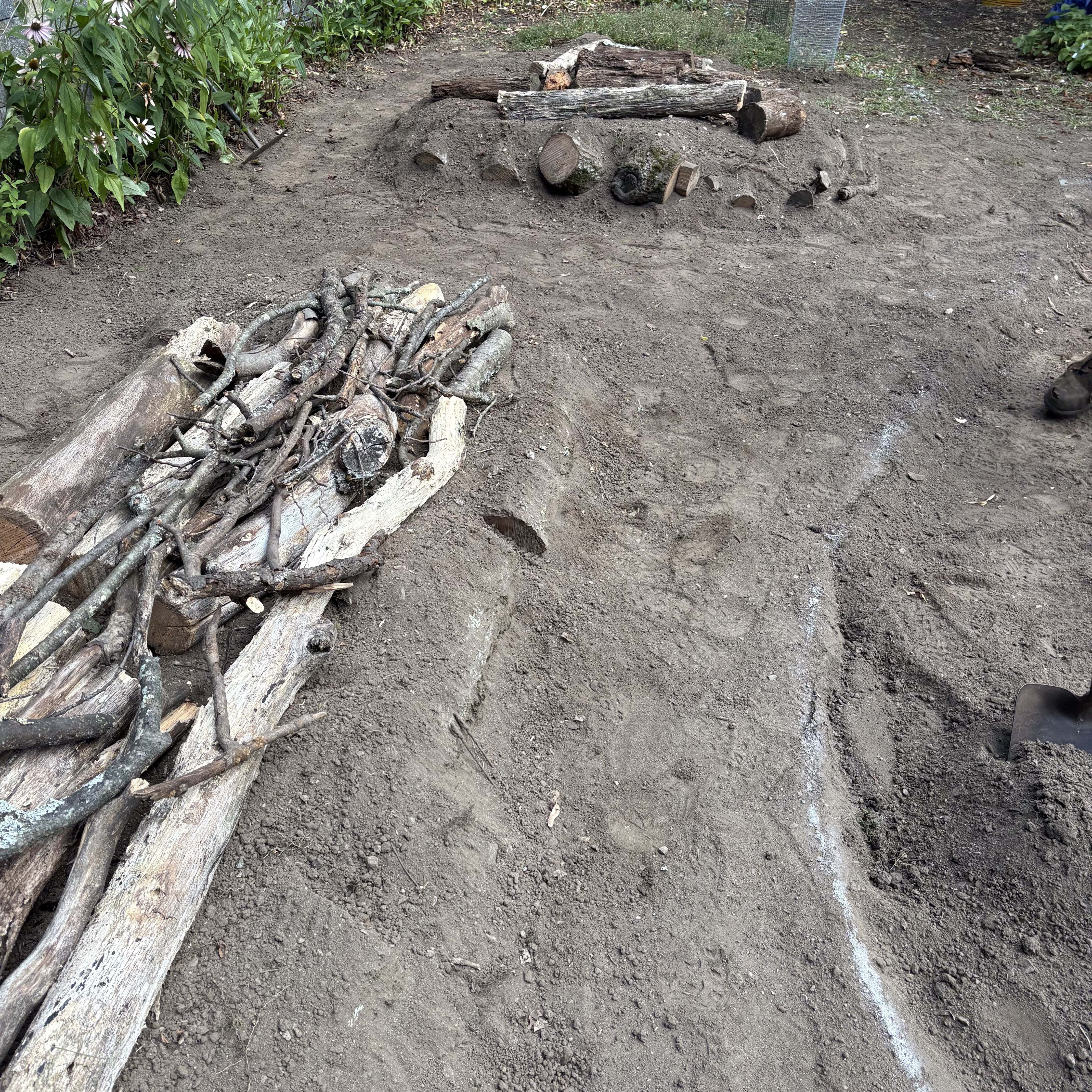
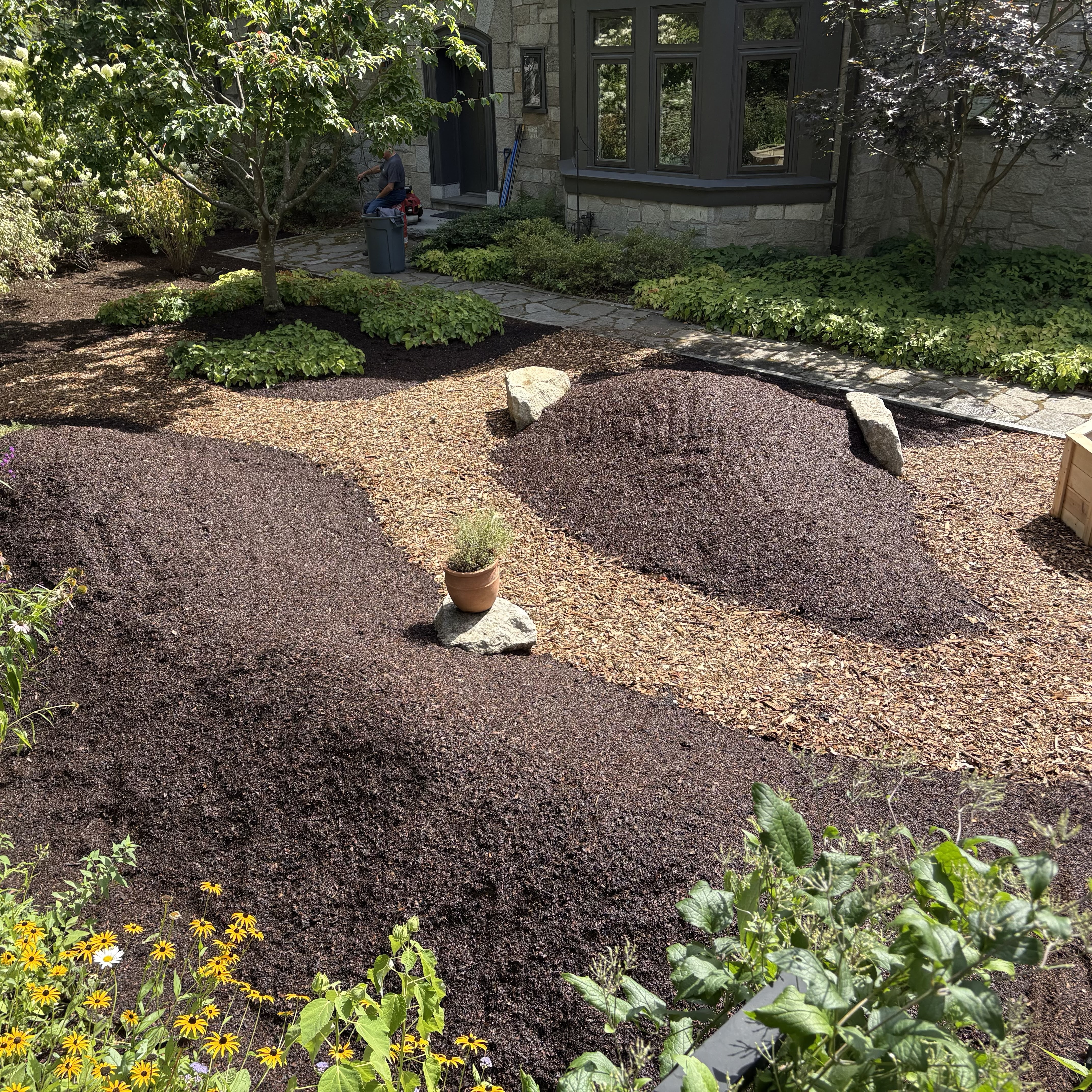
This client already had quite a bit of old wood and small branches to use in the project. We also had an arborist coming to prune the Oak overstory, and their work would provide significant wood to build the beds. The unused wood was chipped and used to create the pathways through the new garden. I asked the arborist to cut the wood in 3′ sections that we could easily use.
In the picture above, during last Fall, we stacked layers of wood and branches and then added loam to fill in the space. To create organic forms for the beds, we built to various heights, and in one case adding a few logs for a fifth layer that got to about four feet. We added a few large stones for spots to sit or place a pot. I also added a couple pounds of Espoma’s Dried Blood, which is pure nitrogen and would help start the process of breaking down the wood. We filled in the paths between the beds with 6+” of chips from the arborist visit, and then covered the beds with several inches of MadMics leaf mulch, as you can see above. It was then well watered and left for the rain and Winter to settle before Spring planting.
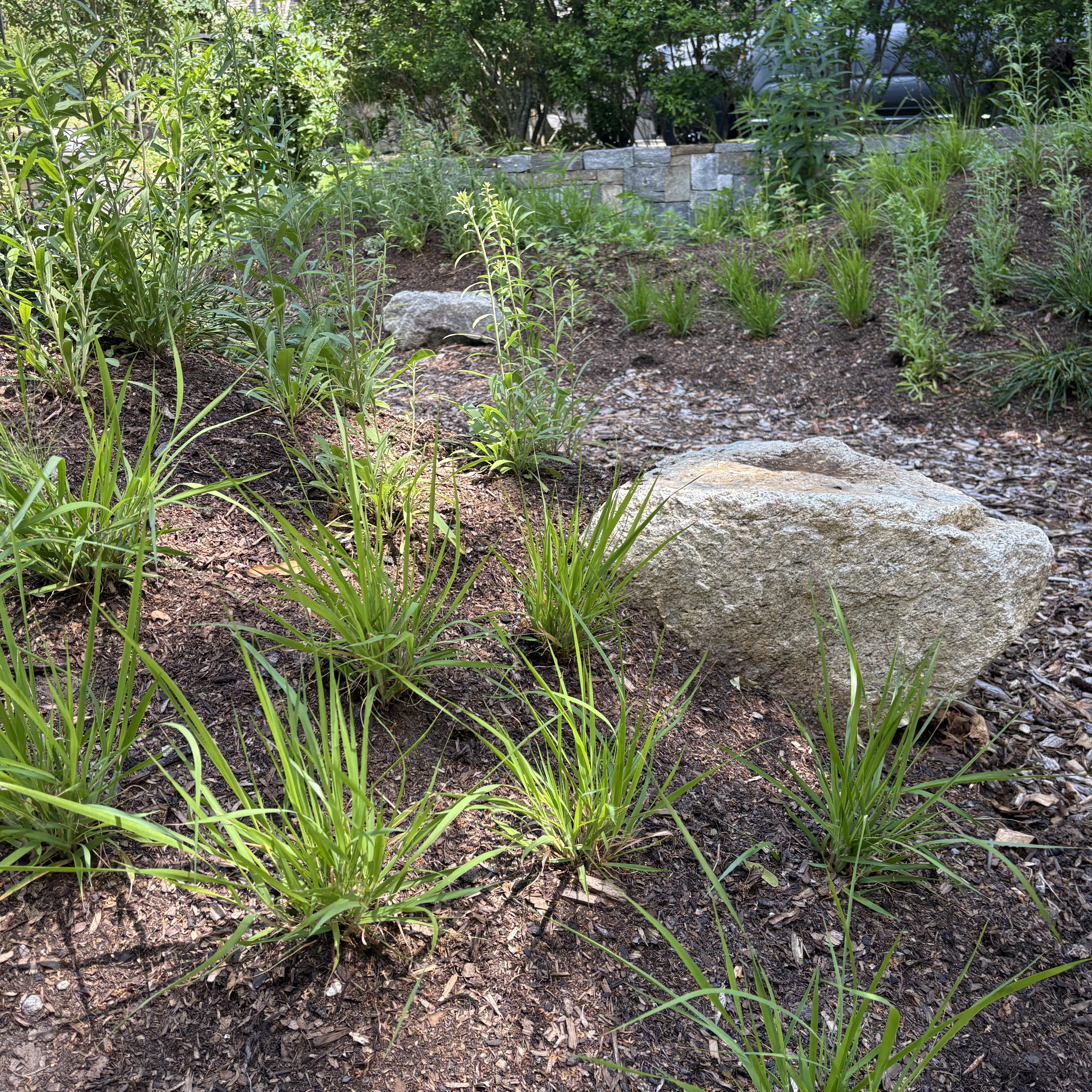
The design concept was to utilize lower growing plants and grasses on the mounds, that would require little care or supplemental water after being established. We chose Plantain Pussytoes, Blue-eyed Grass, Barren Strawberry, Downy Wood Mint, Gray Goldenrod, Prairie Dropseed and Purple Lovegrass. The longer bed close to the wall was to be back planted with a variety of very tall perennials like, Queen of the Prairie, Ironweed, Joe Pye Weed, Giant or Cutleaf Coneflower, etc. The back slope of the long bed would be planted with medium sized plants like Wild Bergamot, Clustered Mountain Mint, Butterfly Weed, Little Bluestem, Red Columbine, and some other transplants in the garden. These medium sized plants would be a step down from the taller plants behind and they would stand above the shorter plants on the raised beds.
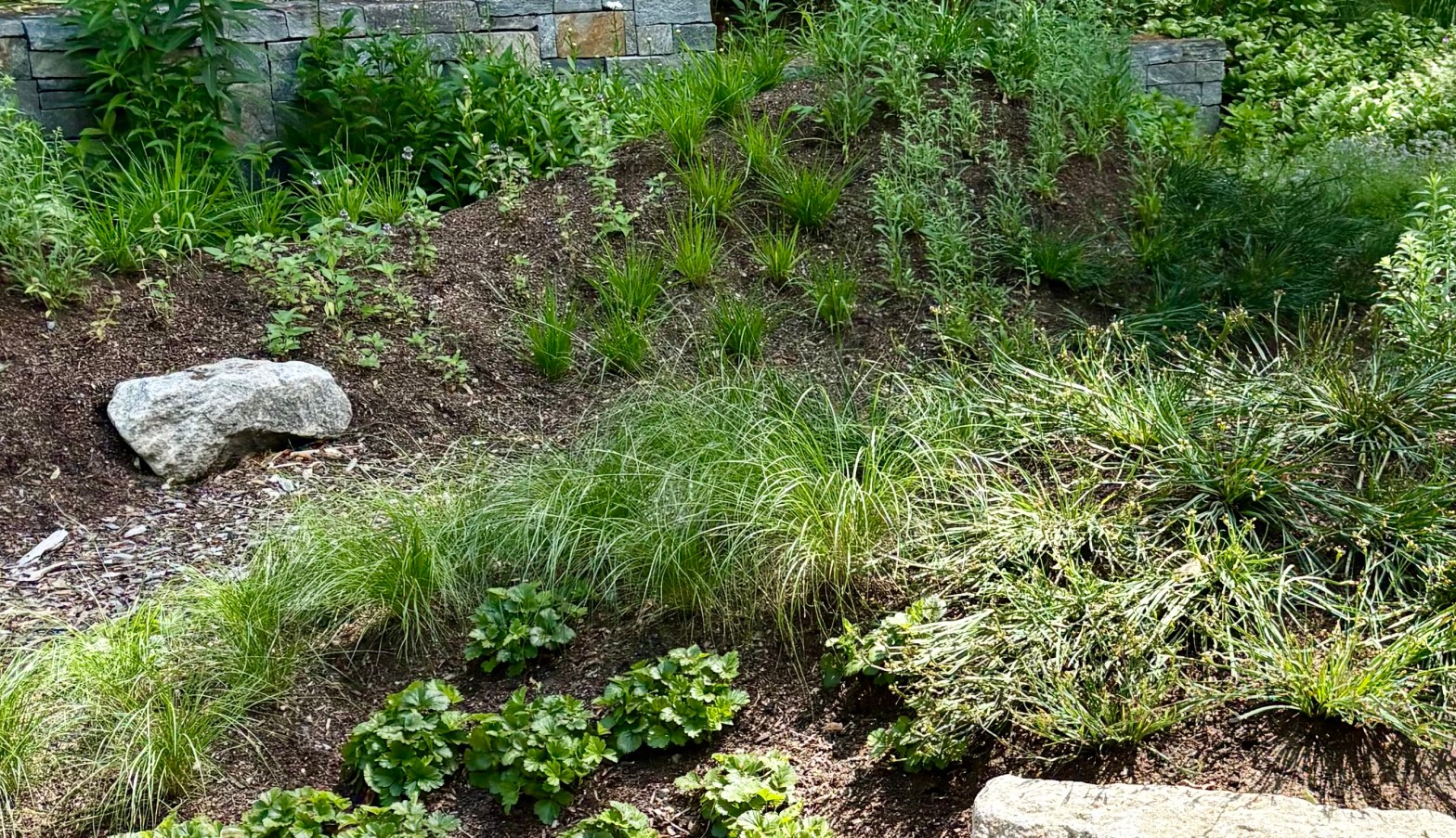
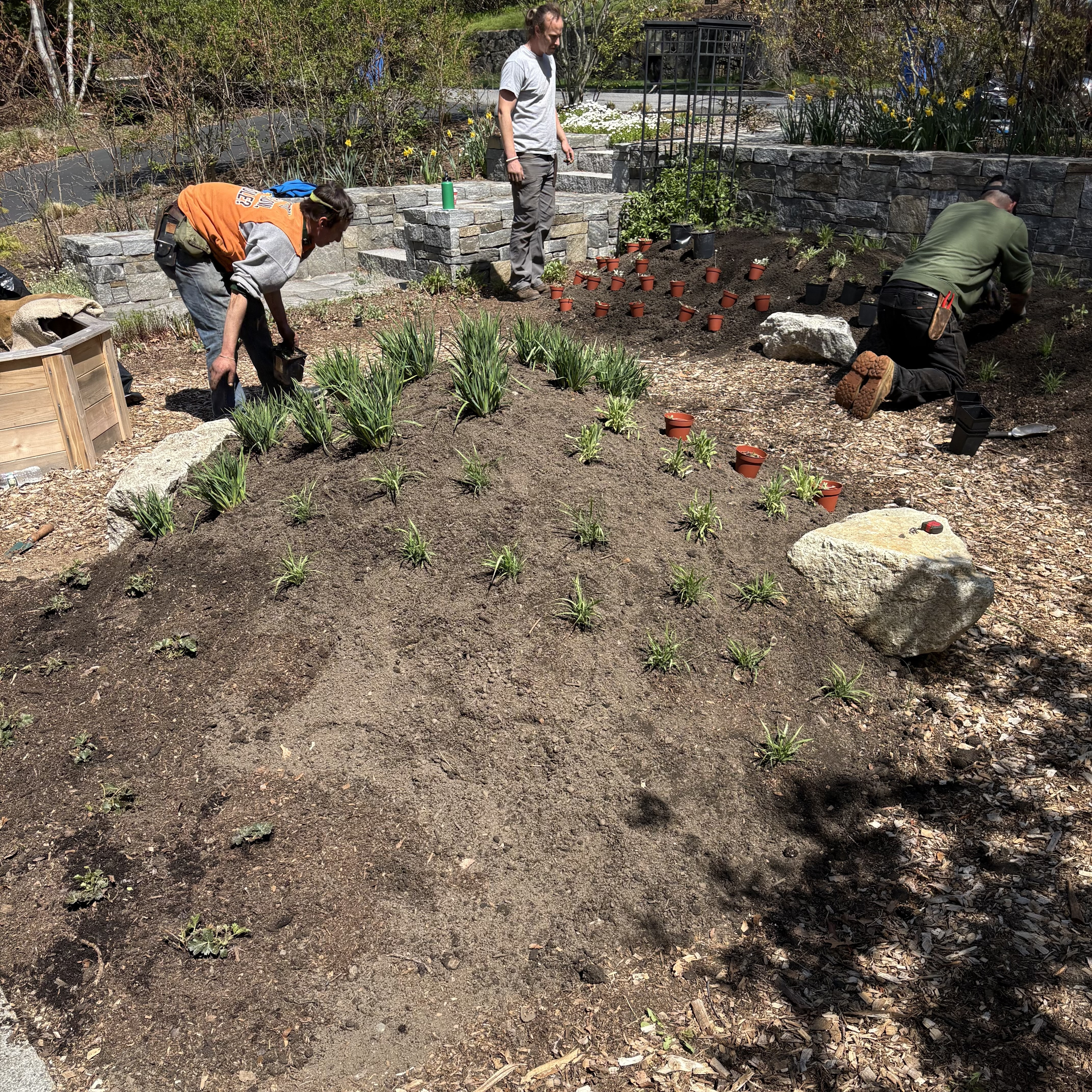
As May came, the beds had settled, so the crew returned with several yards of soil to build up again and we planted, as you can see from the image above. Smaller sized plants and several trays of plugs were used so we could plant densely and avoiding the wood below. Plants were massed in large groupings to maximize the impact of their flowers and seed heads. Out of concern for rabbits and the many small plants, we fenced it for just over a month to allow plants to establish and root. The final image from two weeks ago shows plants flowering and establishing well. Out of an abundance of caution, I have the client spraying with Liquid Fence to discourage rabbit browsing. Even though these are plants that rabbits don’t like, they will often sample new plantings and can wreck havoc on smaller plants.
Over the years, I expect the beds to settle a little as the wood breaks down, but the plants will root deeply and create a dense covering on the mounds and work with the many other native plants in the area to provide nectar, pollen and food for a myriad of insects, animals and birds that live in the garden. Hopefully some of the new plants will expand the types of visitors to this expanding mix of native plants.
When you get to know your garden, there are unlimited creative ideas that can be applied, and I am looking forward to see how it develops in the coming seasons.
If you want to subscribe for free to my more detailed newsletter, please go to the following link: The Barker, a newsletter for gardeners in New England.

