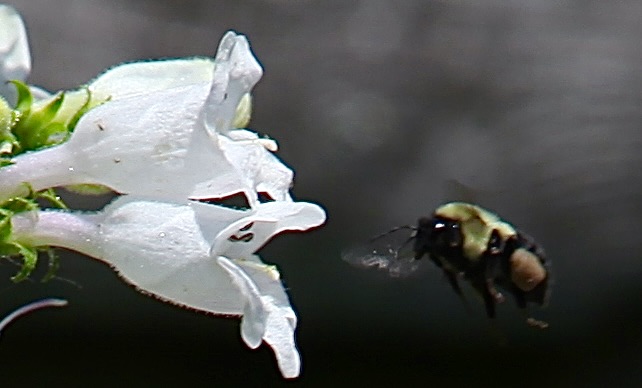
Bees, wasps, flies… those buzzing, fuzzy, flitting little insects that you often hear before you see when in the garden. In the last newsletter, I was talking about native plants and their importance, now I would like to talk about Bees, and when I say Bees, that also includes, different but related, wasps and hornets.
I have had clients say that they want flowers that don’t attract bees, and while I understand some people have dangerous allergies to bee stings, it is important to know that you cannot separate bees and flowers. Even if you planted yellow and red plastic flowers, they probably would still come to investigate! However the bees that typically visit and pollinate our flowers do not bother people unless you grab them or step on a nest (except for pesky yellow jackets.)
Bees exist to pollinate flowers and continue the flower’s existence, and flowers exist to feed bees. When you don’t have the flowers, with their nectar and pollen to feed bees, then you have fewer bees. When you have fewer bees, you don’t get the necessary pollination of plants. The significant removal of habitat over the past century has decreased the number of necessary native plants, and the introduction of chemicals into the ecosystem that kills bees has decreased the bee populations. This tremendously interdependent relationship of flowers and bees has been attacked from all sides and we are losing many of the thousands of native species of bee in North America. Dr. Rob Gegear, at UMass Dartmouth, focuses his research on Bumble Bees, and I had an extensive interview with him two years ago, that goes into this relationship.
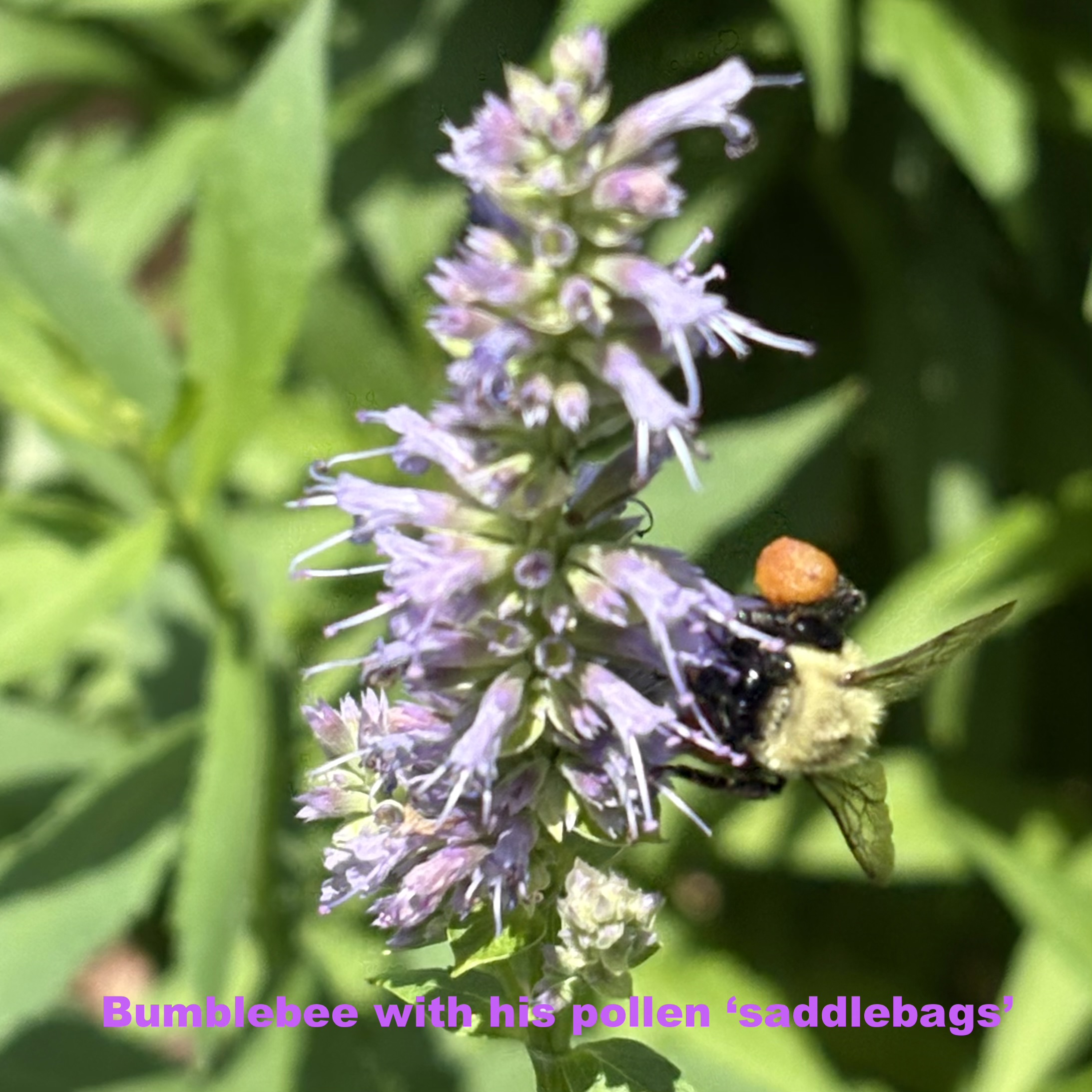
If you stop for a few minutes, when you go out to your garden and look at what is visiting, you will notice quite a range of insects from small flies to big old Bumble Bees (as well as birds, moths, butterflies, garden gnomes, etc). Instead of moving through your garden, stay and look at one plant for a few minutes. Notice that not all bees are the same, especially the bumblebees. There are even smaller bees, wasps and flies that are visiting and pollinating your flowers.
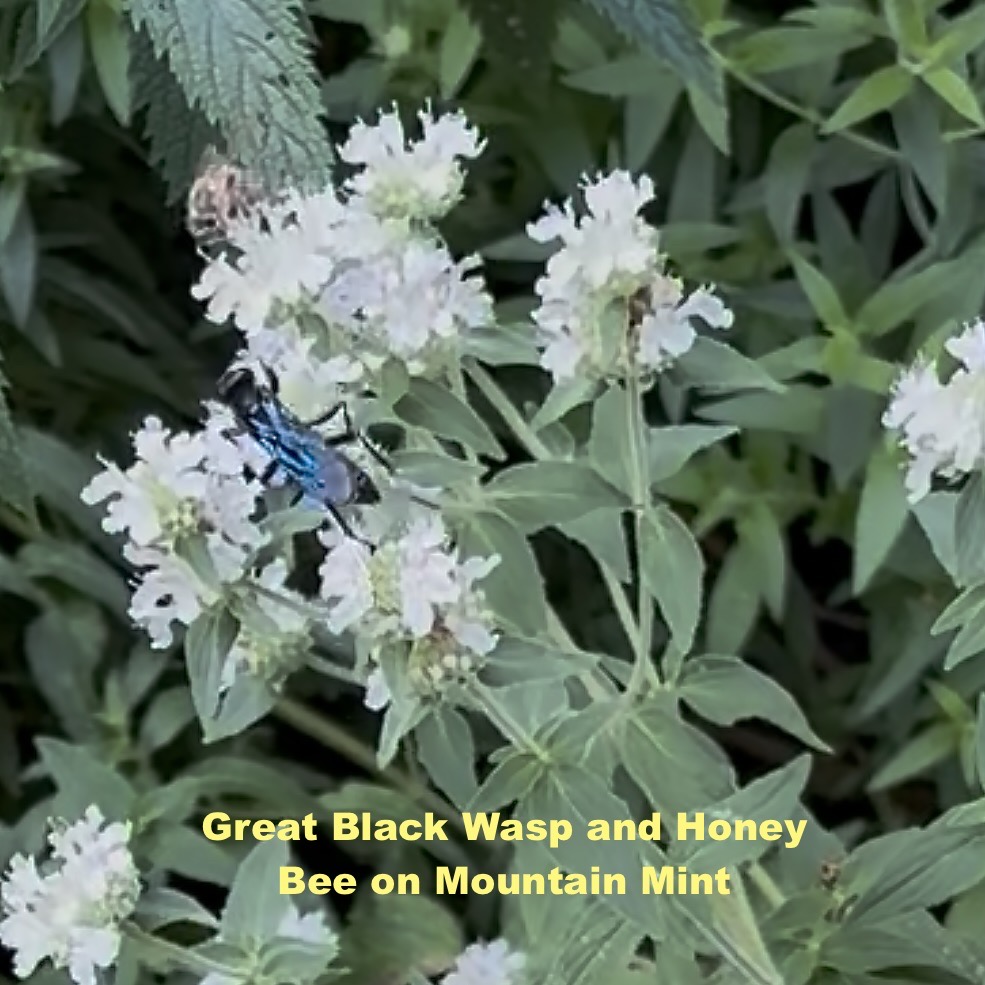
With it being Mountain Mint season, you will find every visitor, and a huge number of them will be Honey Bees. Unfortunately, plants are like our local pizza shop, Louies Pizza. They only make a certain number of Pizzas every night, and if you are late… no pizza for you! While plants create nectar and pollen, they only have so much to give. Some people argue that large Honey Bee populations decrease the amount of resources available for native insects, and that while they collect nectar and pollen, they do not effectively pollinate plants. Insects and plants have evolved over millennia so that specific pollinator activity will properly pollinate the plants. To learn more about the diversity of bees in your garden, check out this Mass Audubon fact sheet on Bees and Wasps.
I imagine you have all heard about the challenges farmers, and hobbyists, are having with Honey Bees: Colony Collapse Disorder. There appears to be no one reason, as it is related to invading insects, disease, chemicals, and other issues. Some beekeepers lose more than half their colonies each year, which makes it more expensive and challenging, especially when it comes to large scale crop pollination.
However, Honey Bees are not native to North America. They were brought by European settlers and are native to Europe and Africa. We have no native bees that produce honey that can be harvested. They have been here for about 400 years, and there are people who would say that they have become naturalized. Moreover, it was the last century that saw a commercial industry develop to farm honey and pollinate specific crops. This increase in Honey Bee population and decrease in beneficial habitat has put stress on the pollinator ecosystem.
There are lots of articles on this, and I offer two articles that argue both sides of the Honey Bee argument. The Xerces Society is an amazing organization for Invertebrate Conservation, and they argue that Honey Bees are causing challenges by crowding out native bees. Best Bees is a local beekeeping and research organization that deploys and manages Honey Bee hives, and they argue that habitat loss is the major challenge and that Honey Bees provide tremendous benefit. Both articles make well-reasoned arguments and offer lots of links for further research.
This is a fascinating and complicated issue, but the one issue both sides agree on is that we need to continue to provide more native plant habitat to feed everyone: Trees, shrubs, perennials, grasses. Everything!
I really encourage you to spend some time looking through the links and articles, and even following their links. In our global society, issues like this present in so many areas. I am not making this a political discussion, but it is interesting to look at this issue as it might relate to other challenges with which we manage.
If you want to subscribe for free to my more detailed newsletter, please go to the following link: The Barker, a newsletter for gardeners in New England.

