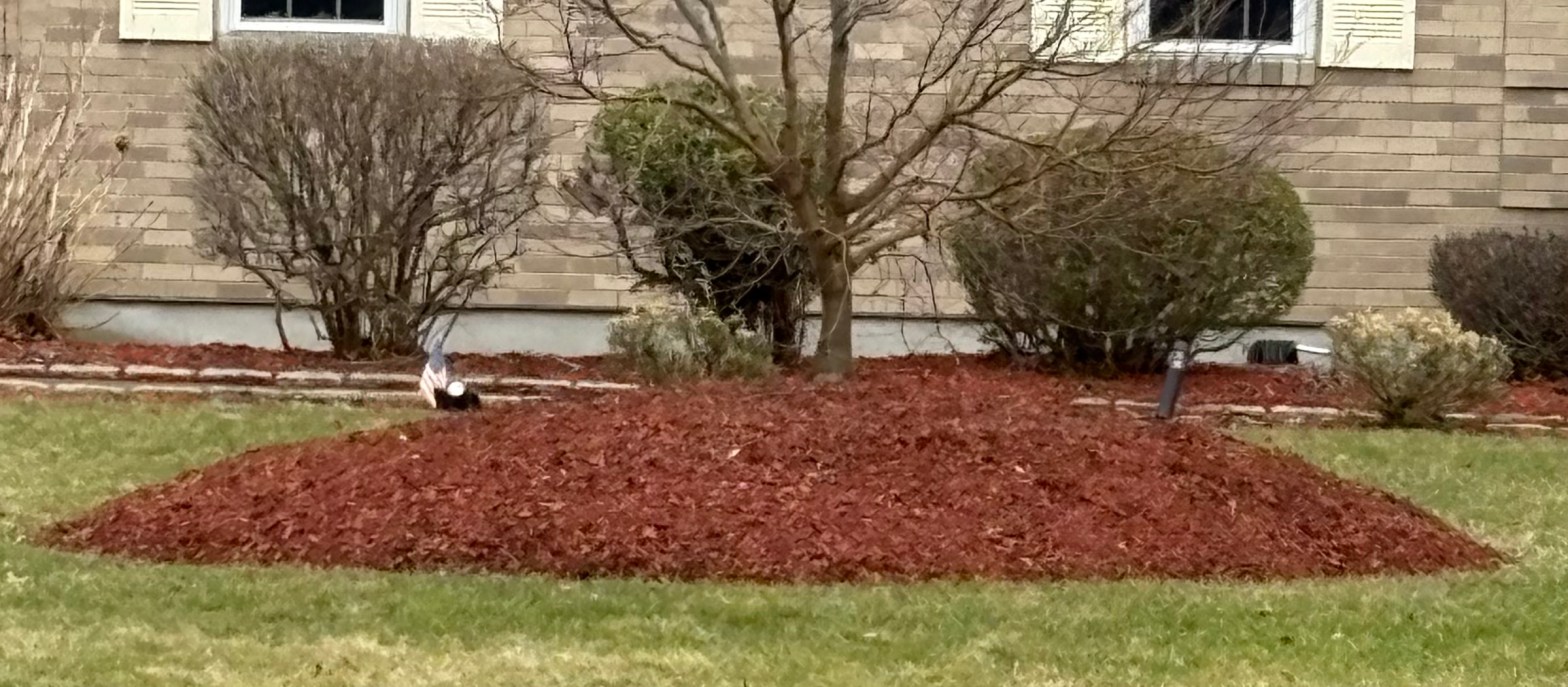
Mulch is my favorite topic to discuss each Spring, because it can be one of the most beneficial things you do to your garden or one of the most damaging. This link goes to a comprehensive post from the past on mulch.
Following on the topic of my previous post, I would like to get you to see mulch as valuable organic matter that needs to be added to your garden. This means that the quality of the mulch is a critical element, whether you have a contractor put it down or you do it yourself. There is so much garbage out there. Most of what you see that is black or bright red is dyed, chipped wood, often containing all sorts of wood, including construction debris that has very little value and takes a lot to break down.
Ideally, if you need a heavier bark mulch for around trees and shrubs, find a non-dyed Pine/Spruce mulch that is chocolate brown or a good hemlock mulch if your prefer the redder color. Fresh wood chips, from your arborist have lots of nutrients, carbohydrates and nitrogen, and is great for trees and shrub borders. For your more ornamental beds with smaller shrubs and perennials, I prefer a fortified leaf mulch like MadMics Mulch. It contains shredded leaves, straw, wood shavings. The non-leaf components are from horse stalls and have real nutrient value with urine and very limited horse manure. All of this is shredded and composted well so it is safe and clean.
The point to mulching is to get organic matter back into the soil to benefit your plants, and while it can look good, the benefits are to suppress weeds, minimize water loss, moderate temperature swings, along with adding organic matter to the soil. Please read the previously linked article for greater detail.


Now to address all of the images of mulch piled high around trees and shrubs. We call it a volcano, when mulch gets piled around trees. This is the dangerous part of mulching, and I see it every day each Spring with volcanos around trees and mulch piled up inside shrubs. Unlike poison that kills quickly, piled mulch kills slowly, with plants going into decline over a few seasons and trees can take longer to die.
So what happens?
With trees, you need to leave the root flare uncovered, where the roots start to extend outwards at the base of the trunk. When these get buried by inches or feet of mulch, new roots are formed looking for air and water at the surface and they can wrap around or girdle the tree, which leads to a slow death. If this has happened over years, you will notice die back in the canopy, a loss of vigor, or even disease or insects.
With shrubs, burying the crown of the plant, where the stems of the plants extend from the roots can lead to death from crown rot or lack of air in the root zone.
You can fix this problem with trees by removing the layers of mulch and exposing the root flare. If it is a big problem, a qualified arborist has tools to remove years of build-up. It will be a more expensive proposition if you have to remove the tree. In your shrubs, you just need to get in there a pull away all the mulch until you get to the roots of the plant.
This is often one of the reasons for plants not thriving. Check the soil/mulch levels around trees and shrubs. Click the above link of previous posts that go into more detail.
If you want to subscribe for free to my more detailed newsletter, please go to the following link: The Barker, a newsletter for gardeners in New England.


