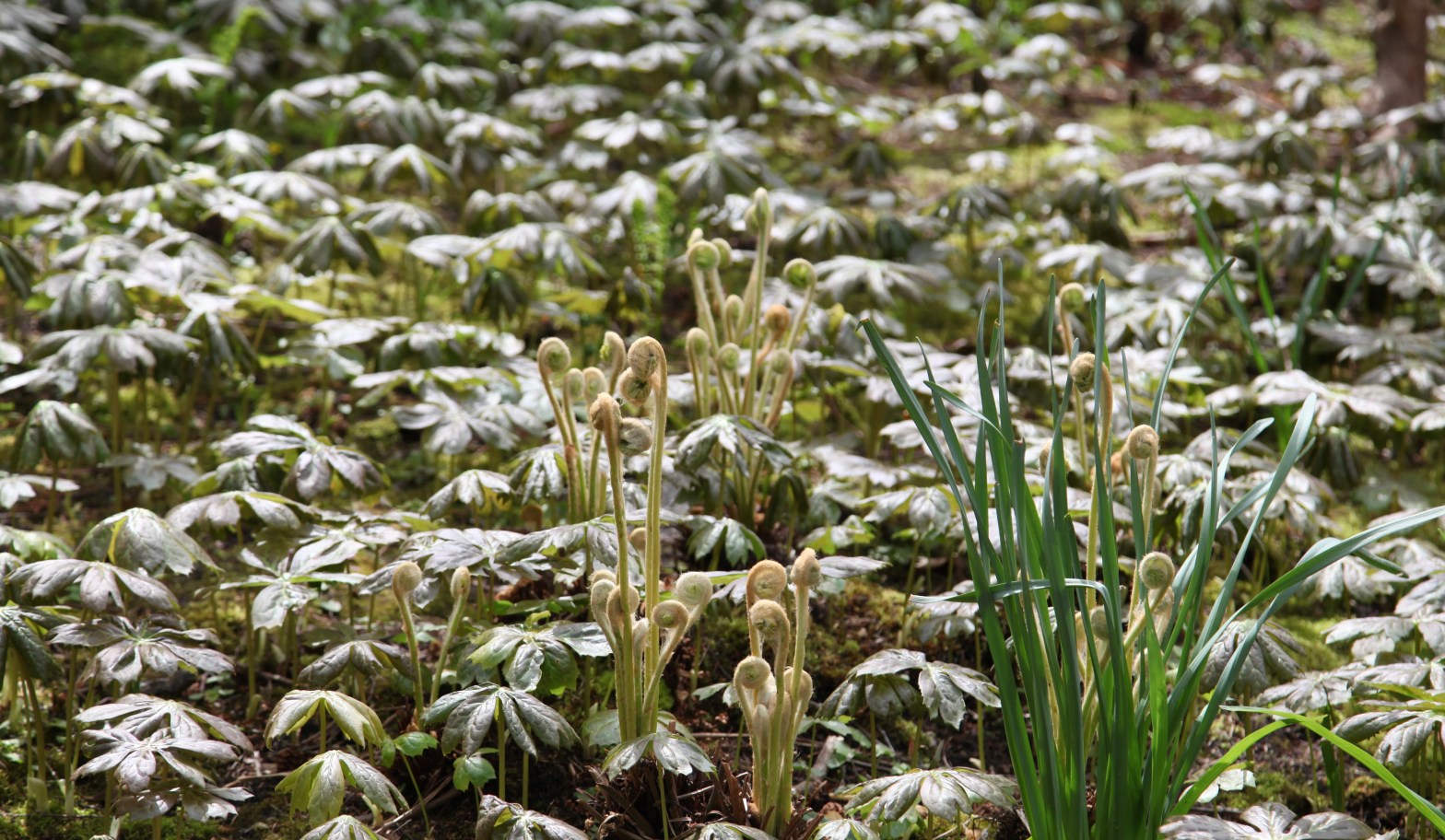
There is a movement underfoot, and it has to do with how we take care of our gardens. It is rooted in a design aesthetic called the New American Garden that is exemplified in the work of Piet Oudolf and the landscape architecture firm of Oehme van Sweden, among others. This style is naturalistic, self-sustaining, and largely native.
Now, almost all of us don’t have the money or the property to create these amazing masterpieces, but the idea when applied to maintenance is simple, less work and far more healthy for the plants, insects, birds, and everything else that inhabits our ecosystem.
The New American Garden Maintenance concept is anathema to what most people, and especially most contractors, believe is the proper way to manage our gardens. I was inspired to write this is as I am watching another Spring with contractors assaulting gardens with back pack and push blowers, removing every speck of dead grass, leaf, or loose organic material from the garden and then replacing it with dyed mulch that offers little to the garden, along with herbicides and insecticides on the grass. Clipping shrubs to create unnatural and unhealthy form. And now, contractors have this new way of generating income by spraying or fogging our gardens for ticks and mosquitos that indiscriminately kill other insects, despite what they say. Even the ‘organic’ sprays have an impact.
While I do like to get on my soapbox sometimes, and this newsletter will hit you with double barrels today, I would rather focus on the solutions and why they are important. I am going to cover a number of topics that are easy to implement and will provide great benefits to your garden and the living ecosystem over time, whether it is native or more traditional. My goal is not to shame anyone, but to help your gardens thrive and decrease the amount of time you have to spend working. This gives you more time to go to the nursery or plant sales to buy more plants. You know who you are!!!
- Stop removing all the organic matter – For plants to grow and flower, they need water and organic matter. Plants, as well as people, are made of water, but they also need organic matter to create new leaves every year, to grow new branches, and to create flowers, fruits and seeds. If we are constantly removing leaves, bagging grass clippings, then over time we have gardens that become unhealthy and stressed. Stress brings on disease and attracts insects.
- Remedy – Leave a layer of leaves in your garden beds. You can cover with a light layer on mulch in the Spring. In the fall, use your lawnmower to mulch in leaves on your lawn. Take some away if the layer is too thick. Don’t bag grass clippings, leave them on lawn. They are pure nitrogen, which is fertilizer. Leave pruned material in beds to break down. Cut into smaller pieces and hide around your garden. You see where I am going. There is little need to haul away all this material. When the arborist comes, have them leave the chips and use under trees and big shrubs or for pathways.
- Move beyond the naked and clipped aesthetic – It is so much work to to clean up every speck of twigs and leaves in the Fall. The concept of lollipopped trees and meatballs shrubs has been created by contractors who really don’t know about healthy gardens and plants. We can create orderly and clean gardens without going to the extreme and it is much less work.
- Remedy – We have to shift our expectation of what a beautiful garden looks like. Leaving leaves in the garden beds over Winter. Leaving perennial seed heads up over the Winter and leaving cuttings in beds when cutting them down in Spring. Pruning plants to your aesthetic desire whether it is formal or informal, but stop using shears to create unhealthy, short-lived plants.
- Right plant, right place – This is unappreciated until you realize how much work you put into pruning plants that aren’t located properly. We waste so much time with plants that aren’t in the right place to thrive. Light, Soil, Moisture, and location. If you are constantly pruning plants for size then its in the wrong place, with the exception being plants that we prune to enhance or repeat flowering (e.g., Paniculate Hydrangeas, Spireas, Roses, etc.) If they don’t flower well or have disease issues, then it often is the result of these conditions not being met.
- Remedy – For healthy plants that require little care, make sure they are getting:
- Proper sunlight (full sun is 6+ hours),
- Appropriate moisture. Some plants have a wide range of tolerance, while many don’t (Lavender in moist, part sun will not thrive.)
- Appropriate soil conditions. Again, some plants have a wide tolerance for soil types. When you hear that plant likes rich soil, then it needs lots of organic matter and probably likes it moist (Rhododendron, Macrophylla Hydrangea). Thin soil, typically has little organic matter and is preferred by plants like Sedum and Paniculate Hydrangea.
- Right Placement. Trying to keep plants to 4′ that want to be 10′ tall and wide is a huge source of work in the garden. There is almost always a proper location for every plant, and one of the most common problems I see is the 10′ Rhododendron in front of the 4′ window. Find the plant at maturity that fits the space and you will work far less.
- Remedy – For healthy plants that require little care, make sure they are getting:
- Water intentionally, not on a schedule
- I have an irrigation system, and it is invaluable, but I rarely leave it on, unless I am on vacation. Pay attention to the weather, get a weather station, dig in your soil to check if you aren’t sure if it needs water. The biggest contributor to plant death or poor health has to do with water. Gardens that get watered regularly, but for just a few minutes a day are in great danger during heat waves or dry spells. Gardens that get overwatered, on top of rainfall are more susceptible to disease and fungal challenges.
- Use chemicals only when absolutely necessary – If you have native plants, then allowing insects to eat leaves is part of the natural process. Plants act as hosts to specific insects who need their pollen and nectar, but also lay eggs on them and require their offspring to eat the foliage. As with all plants, we should just let insects do their thing. Often by spraying or bringing chemicals into the equation, we are creating an imbalance that compounds into other problems. Yes, some insects can be devastating like Viburnum Leaf Beetle, Sawflies, Japanese Beetles, but I encourage you find a top Plant Healthcare Company that employs IPM to bring an imbalance back into balance. They use only what is necessary to restore balance, not to eliminate. Broad spectrum herbicides and insecticides eliminate indiscriminately and cause more problems.
- Add quality organic matter – I am not going to talk about mulch, because that is the next section of the newsletter. If you add compost or other organic matter, make sure you know the source of that material. Our local Transfer Station takes local green waste, grinds it and composts it over time to then let people take home. It is a heavy compost with leaves, cuttings, grass clippings, weeds and everything else. I have asked for several years and they still do not test it, so we don’t know if there are any heavy metals, but I have seen enough gardens that have used it to know that they don’t compost it enough to get the high heat to kill weed seeds, so you are getting all sorts of stuff. Get compost from a reputable dealer in bulk or use a quality bagged product if you need smaller amounts. If you follow some of the above suggestions, then your garden will need less added compost.
I know that I can be direct sometimes, and I don’t try to be mean, but if we can continue to shift the image of what a beautiful garden looks like with some of the above suggestions, then we can create healthier gardens that require less work or intervention.
I am spending a lot of time with people to adjust the maintenance work they perform in their gardens.
If you want to subscribe for free to my more detailed newsletter, please go to the following link: The Barker, a newsletter for gardeners in New England.
 Barking Dog Gardens - Gardening in New England
I totally agree and operate the same way here at my place in NH.
LikeLike