With very early Spring come flowers that can be susceptible to the brutality of Mother Nature. We see the fragility of Magnolia and Macrophylla Hydrangea flowers here in New England when a frost comes through in April, and it can crush the flowers and flower buds respectively before they even had a chance to shine.
I have written before about an old friend, Dan Gregg, who owns Grelen Nursery, a 1,000 acre tree nursery in Orange, VA, an hour from Charlottesville. They grow an incredible range of trees and large shrubs. Over a decade ago, they opened The Market at Grelen on the property that draws people to eat, shop, hike and pick their own fruit. For the pick your own fruit, they have all sorts of berries, and they grow apples and peaches.
Peaches are some of the earliest trees to flower, and, like Magnolias and Hydrangeas in New England, their flowers and buds are susceptible to frosts and temperatures below freezing. If peach flowers are killed by frost before they are pollinated, then they will not produce fruit. Last week, they had temperatures drop into the low 20s overnight. The open flowers would be killed in the upper 20s and the un-opened flower buds would be killed in the lower 20s.
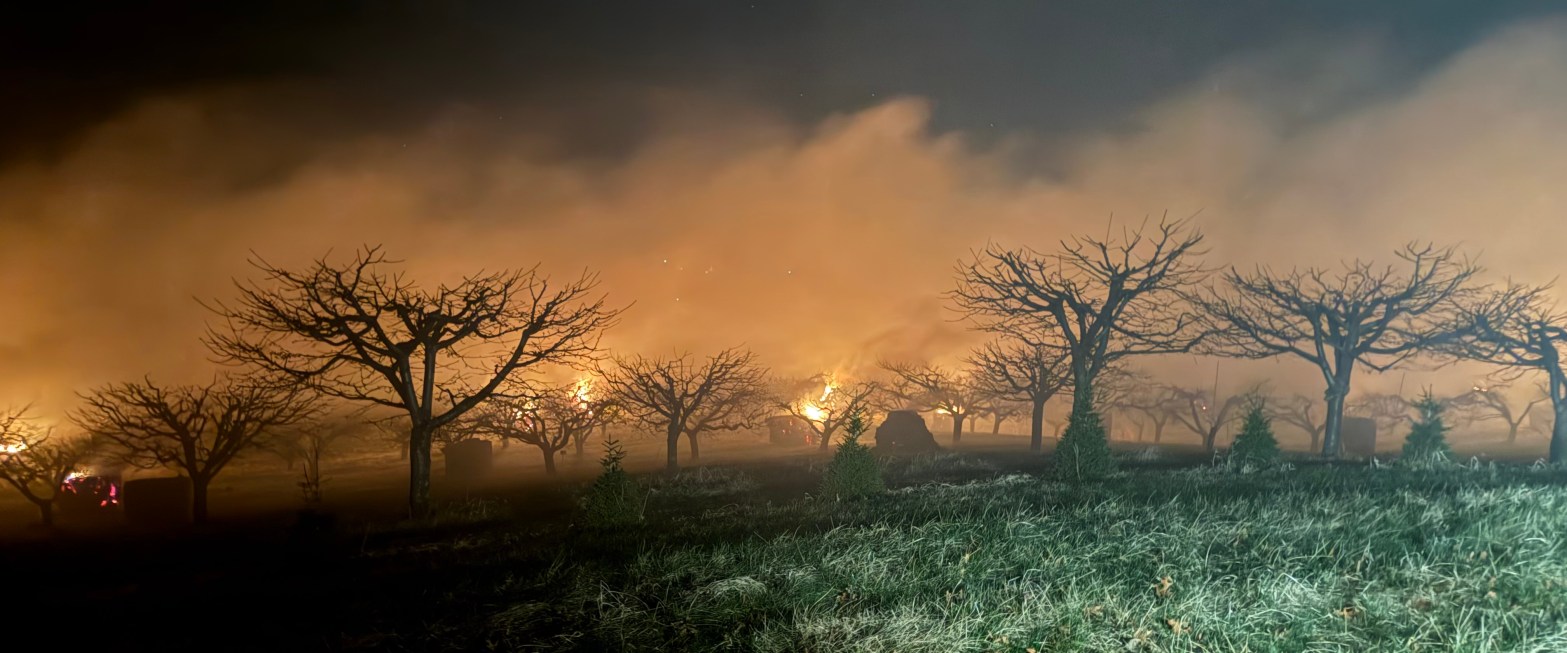
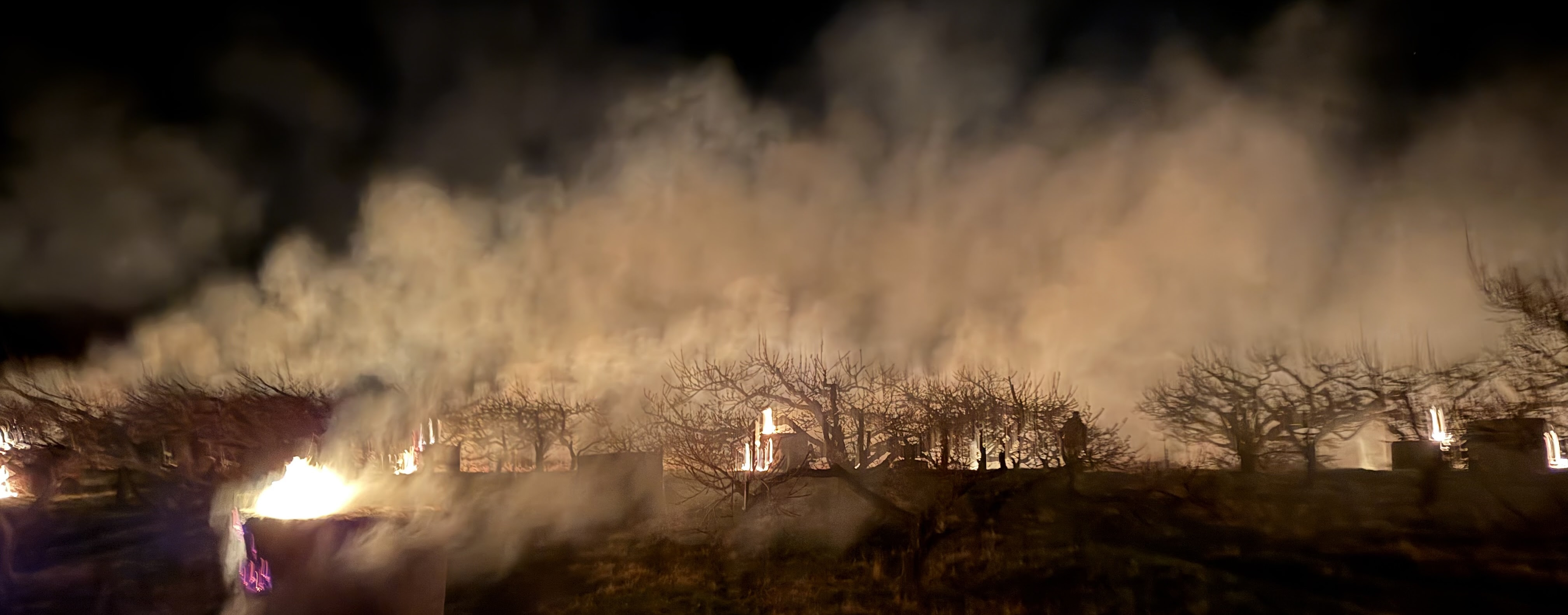
The only option was to make sure the temperature around the trees did not reach those low temperatures. On that night, Dan’s youngest son, with a crew of workers, spent the whole night in the orchard employing an old farmers practice of lighting hay bales. The burning hay creates some heat and huge clouds of smoke, and the smoke sits and adds an insulating layer to keep the heat trapped close to the trees and flowers.
They were measuring temperatures in the orchard during the night and found that they had raised the ambient temperature 4-5º compared to the temperature on the other side of the nursery.
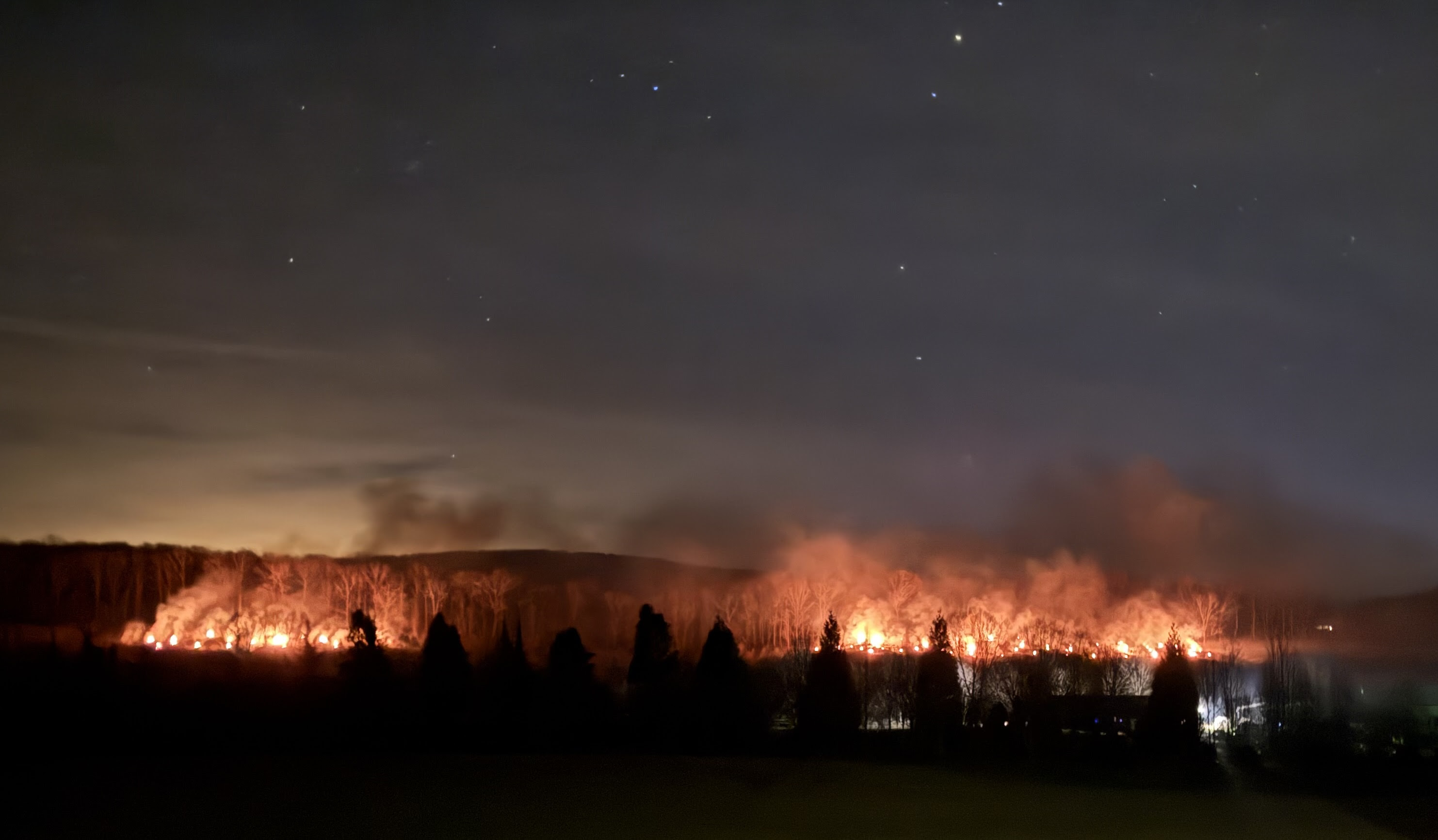
The above photo is stunning under the starry sky, and you have to remember this is a tree nursery with an incredibly valuable inventory of trees surrounding this orchard, many of which are over a decade old. Great care must be taken when lighting fires like this so that you don’t burn down the nursery!
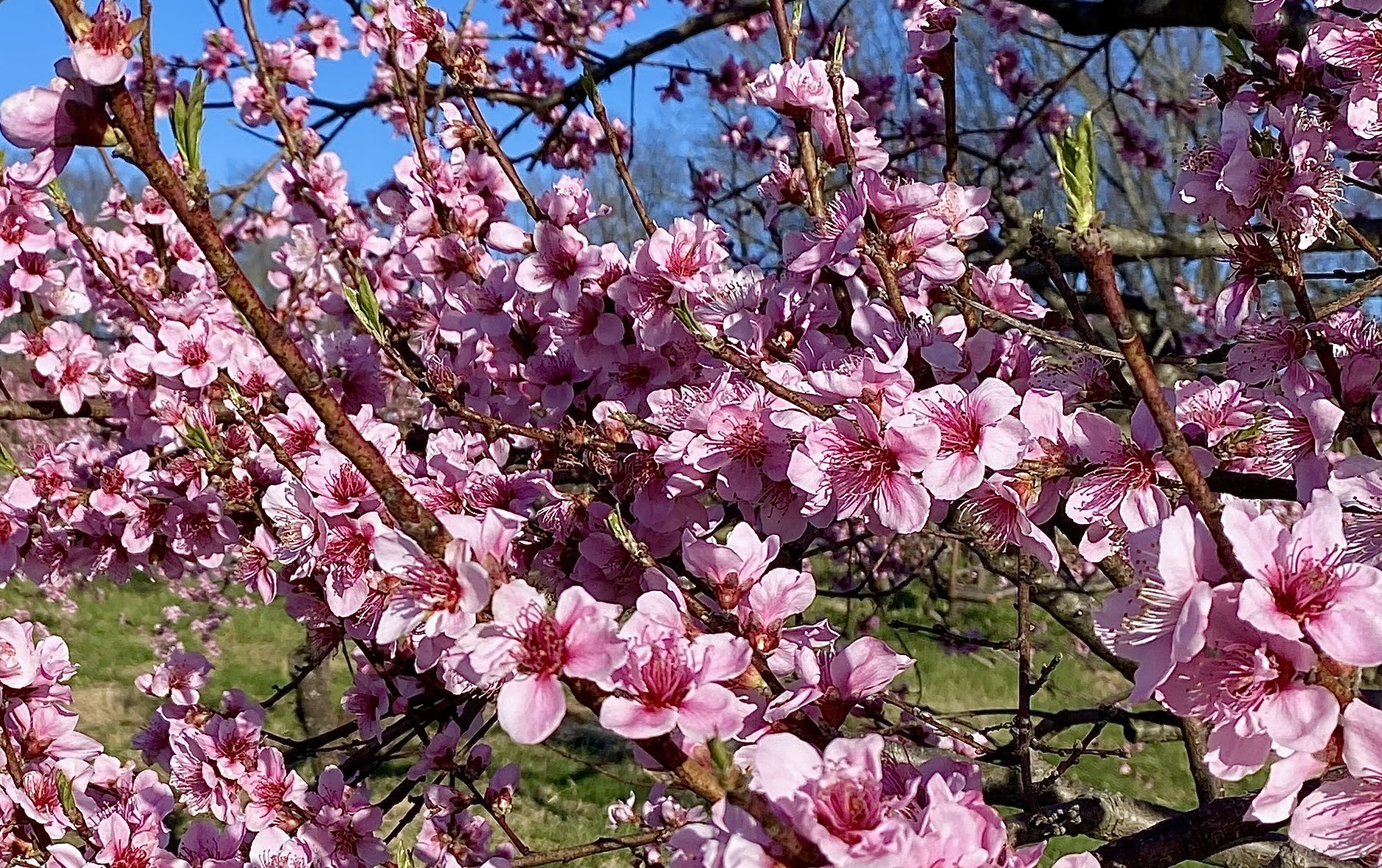
As of now, night time temperatures are back above freezing, and most of the flowers survived. The weather in the coming weeks look good and the pollinators can do their work. Dan said that sometimes the freeze can mess up the pollinators ability to do their job. They appear to have lost about 20% of the flowers, but without this intervention, it could have been a complete loss as the temperature got down to 22º. Since Peaches tend to overproduce fruit, that needs to be thinned out as they grow, this may work out well for the season. The picture below is from just a few days ago, and if you look close you can see some dead flowers and a few that have been singed a little.
Just to be clear, I am not suggesting you start fires under your Magnolias and Hydrangeas this Spring if we have some frosts during their flowering and budding. I thought this would be an interesting story about the lengths growers go to battle mother nature.
If you want to subscribe for free to my more detailed newsletter, please go to the following link: The Barker, a newsletter for gardeners in New England.
 Barking Dog Gardens - Gardening in New England