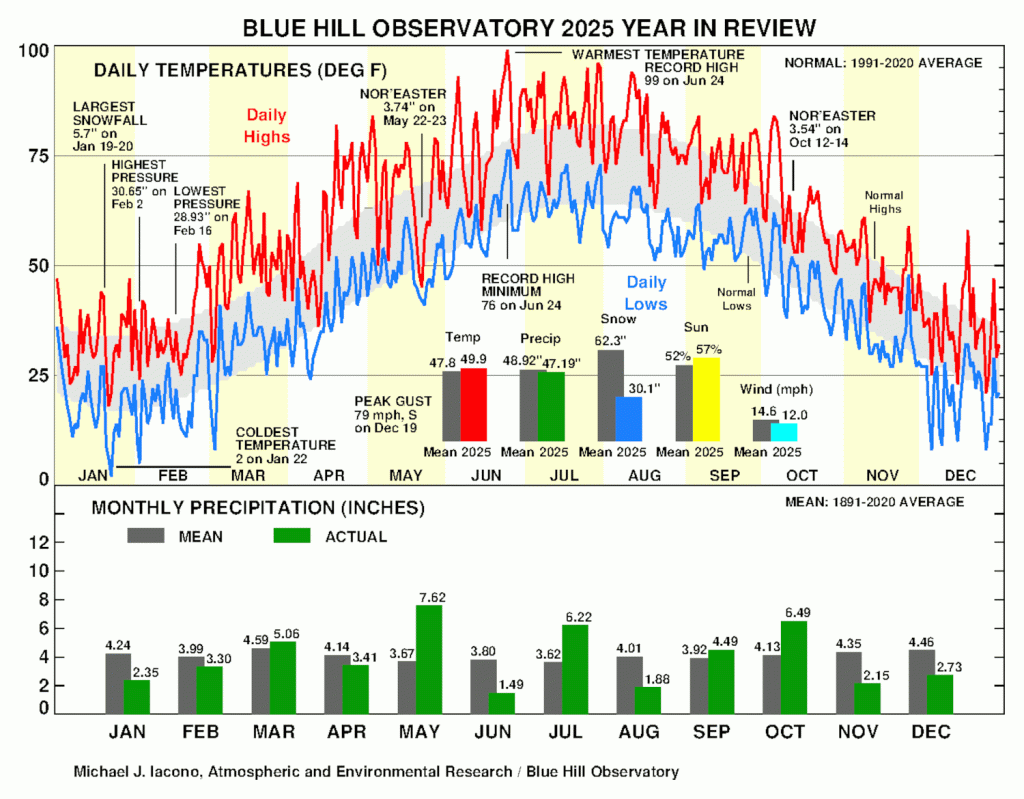
As much as I like to talk about plants and create plans in the garden, I am also a bit of a numbers and data geek. Hence, one of my favorite graphics of the year is the year-end weather summary, created by Mike Iacono, Chief Scientist at Blue Hill Observatory. I wrote about a great conversation I had with Mike in the December newsletter.
It is truly amazing that Mike can put so much information into one, easily digested, graphic. The red and blue lines track the high and low temps throughout the year, while the gray area in the middle reflects the 30 year averages. Following are some of the highlights from last year and the impact they had in the garden. Remember, these measurements are from Blue Hill that is Southwest of Boston and inside of 128/95, but they can be representative for trends in the region.
- Precipitation was, again, below the mean for the year, despite significant rain over-deliveries in May, July and October( 4″, 2.4″, and 2.4″ respectively) These large amounts were due to one time events, as seen by nor’easters recorded on graphic. The wet May and hot dry Summer led to significant fungal challenges, as Alden Johnson mentioned in my Love Letter to Trees.
- The temperature was above the mean, as it has continued to be for years. We had a warm Spring and Summer, with a very cool August (see plummeting red and blue lines in August) and a temperate Fall that seemed to go on forever… until December dropped the bomb.
- We had very little snowfall, which left the soil exposed last winter. When we had that bad cold snap in March, it froze the uncovered ground and plant roots. So, when it quickly warmed in April, the frozen ground could not supply water to plant roots that were demanding it with the warming temperatures. This led to the severe damage to many evergreens, especially Rhododendrons. This year, despite the severe cold, our plants roots have been snuggled under a significant, insulating layer of snow that prevents the ground from freezing so deeply. As the snow melts in March, it will provide plenty of moisture to plants as they demand it when they start waking up. I would expect little ‘Winter Burn’ this Spring, however there may be some plants already suffering from the sustained and significant cold we had in January.
If you want to subscribe for free to my more detailed newsletter, please go to the following link: The Barker, a newsletter for gardeners in New England.
 Barking Dog Gardens - Gardening in New England