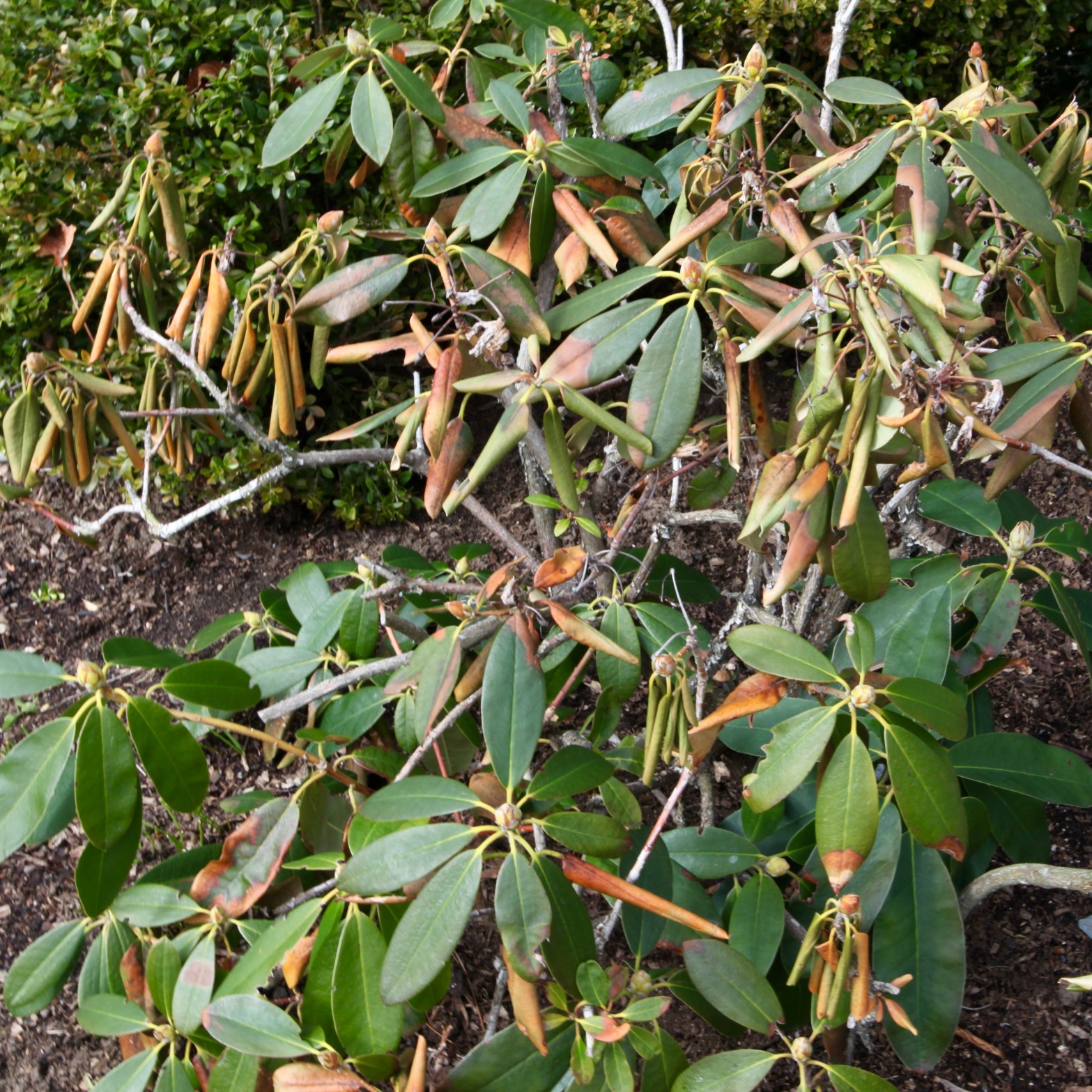
I am shocked and sympathizing with all of you over the challenges we are seeing with many plants from the cold weather this Winter, on top of the drought. You may have noticed that some Rhododendrons/Azaleas have not fully come back from their Winter form when the leaves curl up to protect from the cold. See the image below that shows a common sight I am seeing of plants with healthy looking leaves and curled leaves.
Check out this detailed article that discusses the science behind the curling of Rhododendron leaves.
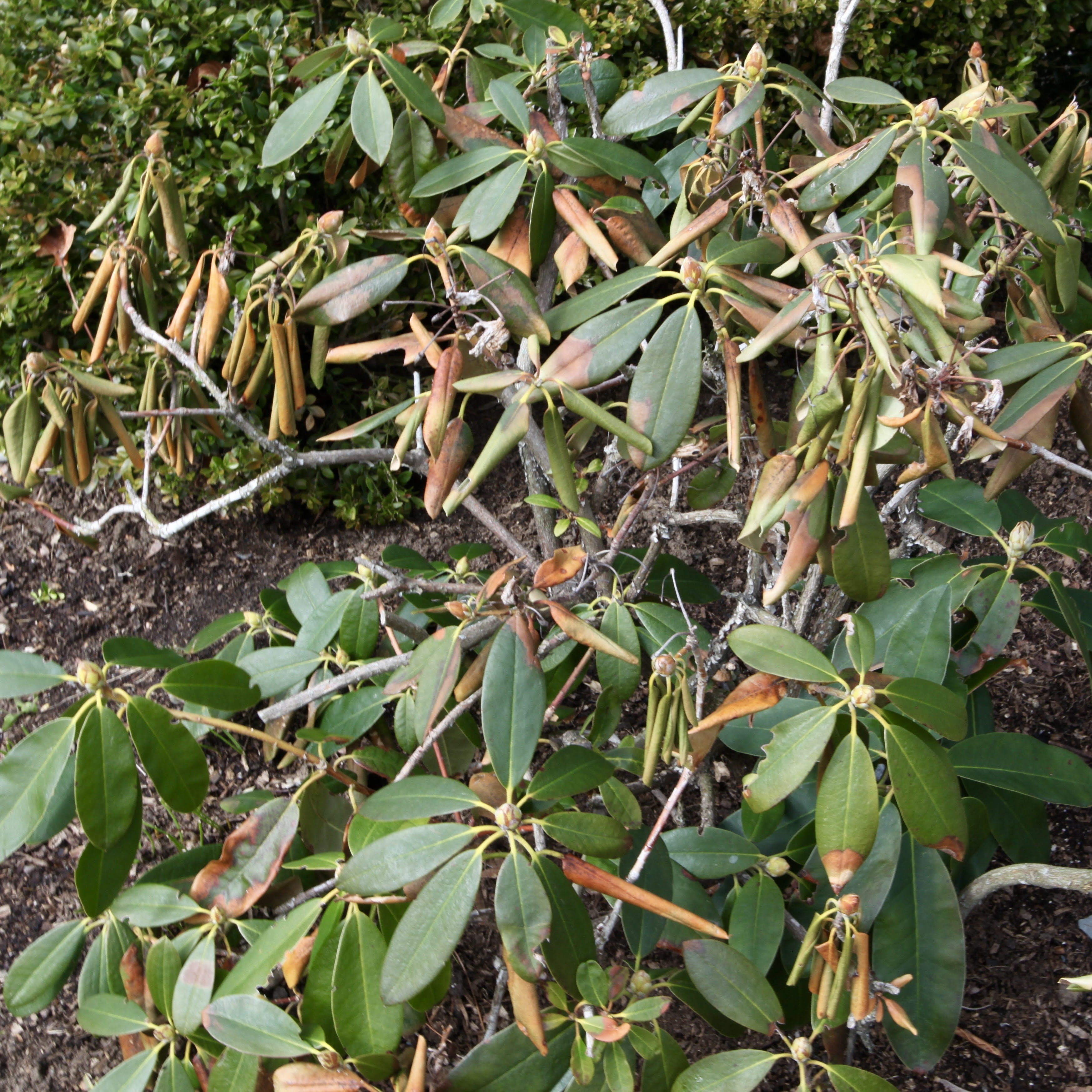
Basically, we a dealing with a significant issue of Winter burn that is more extreme than we usually see in late Winter. If you have plants with this damage, I recommend leaving them until they start to send out new growth later in the Spring. By pruning out branches now, you will probably be pruning off more than you need to. I know it will look ugly, but just wait for new growth.
It can be hard to differentiate between Winter burn, partially dead, and fully dead. With the drought last year, that is still lingering this Spring, I am seeing a lot of plants that died from drought and the Winter weather, as well as plants that just have Winter burn. Don’t rush and make rash decisions. We have had some good rain this Spring, just keep an eye on the weather and do all you can to revive your stressed plants. By late Spring, you should have your answer on the level of damage and from where new growth will sprout.
We’ll have to wait and see if there is any cold damage to our deciduous trees and shrubs. We didn’t have super cold weather this Winter, but we did have some sustained periods of temperatures in the teens and lower. This froze the ground below the surface and made it hard for plants to get moisture during the warming spells. Most of February was well below freezing and then it suddenly started warming at the end of February and into March, but the ground remained frozen well into March. I was poking around during the second week and still found some hard soil but plants were exposed to sun and warming temperature and needed water. This is probably where the problems were compounded.
In the 25 years that I have been back working on the east coast, I have seen our USDA Plant Hardiness Zone go from a 5b to a 6b, which means, in theory, that we can grow plants that have a lower tolerance to cold. However, what we are seeing with these shifts in climate is that the average temperatures may be rising, but the variation and extremes seem to be expanding too. Nurseries are always pushing the line with plants they offer, so make sure as you add plants to your garden, you understand the temperature ranges in which they survive. If you are going to purchase plants that are right on your hardiness limit, know that you may need a bit of luck and protection to get them established.
If you want to subscribe for free to my more detailed newsletter, please go to the following link: The Barker, a newsletter for gardeners in New England.
 Barking Dog Gardens - Gardening in New England