Some thoughts as we work through August and the latter part of Summer.
2025 Perennial Plant of the Year
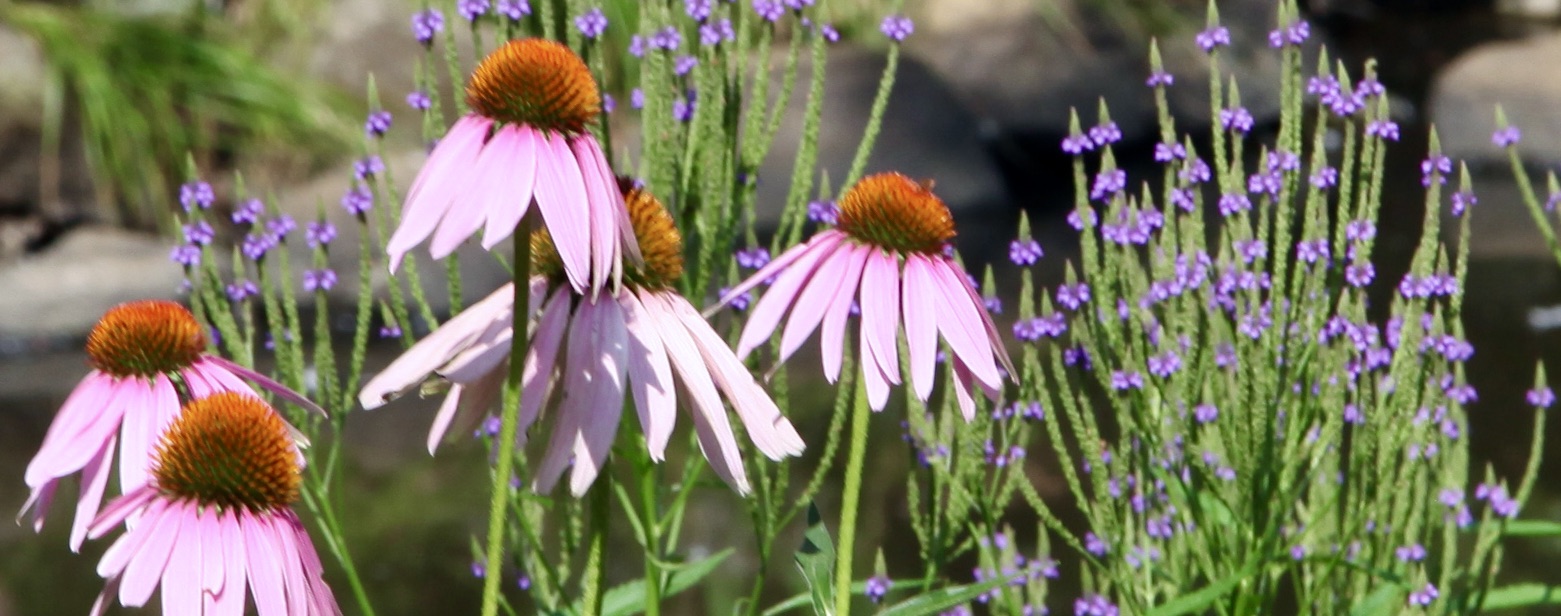
Hot news from the annual symposium of the Perennial Plant Association, Clustered Mountain Mint, or Pycnanthemum muticum, is named the 2025 Perennial Plant of the Year. Great to see another native on the list this year. If you have sunny space where some Bee Balm, Echinacea, Verbena or grasses are growing, this is a great addition. It can be a bit of a bully, but pulling expanding shoots in the spring will keep it in check. Closely related to true mints, so no pests bother with it and it is free of any other cultural problems or diseases.
Summer to fall flowers attract bees and butterflies and it grows to 3′. It really is irresistible to pollinators, and the leaves can be used to make tea. Try Bee Balm and Mountain Mint leaves for an invigorating tea. Good to see a Mountain Mint, of which there are several types (Hairy Mountain Mint, Virginia Mountain Mint, and Narrow-Leaf Mountain Mint), get some well-deserved credit. Check out their website for past winners.
Self-Burying Seeds
In the category of wildly cool, a professor in Human-Computer Interaction at Carnegie Mellon University has created a wooden product that when it gets wet, drills an attached seed into the ground. This improves germination and loss to wildlife. The implications for aerial seeding of open spaces and agricultures is substantial. Watch the video in the link.
What is a Vole?
Here is an anecdote from my own garden this season. With last year’s rain and the moist, warm Winter, we are seeing a proliferation of insects and other pests in our gardens this year, as well as some unbeatable flower displays on many plants.
About two weeks ago I noticed some Vole tracks in my lawn. They have never been a problem, as I usually see a few in the early Spring. However, over the course of a week, every morning the tracks expanded and were more defined as the traffic was turning into rush hour on route 128.
Voles often get confused with mice and moles. They more closely resemble mice and are responsible for the snake-like tracks you will find in your lawn in early spring and throughout the year. Over the winter, they will live under leaves and are responsible for a lot of damage to the lower trunks on trees and shrubs.
Moles are mostly insectivores and cause the underground tunnels you may see through your garden and lawn as they bulge upwards. Voles are mostly herbivores and eat plants, roots and grass as they tunnel on the surface through your lawn or beds.
Like rabbits, if they are happy with lots of lush plants and organic material, they will have multiple litters and have a population explosion.
Since it was getting out of control, I set some basic mouse traps in the pathways of the lawn with a little peanut butter and put things back in balance.
Please remember that if you have challenges with rodents, that using traps to manage the population is the only acceptable solution. Many pest control companies are still using bait traps that attract and poison them. These dead critters are then eaten by raccoons, skunks, fox, coyote, predatory birds and are then poisoned themselves. This is one of the reasons that we are dealing with the rabbit overpopulation because their predators are dying, and as herbivores, the rabbits do not eat the poisoned rodents. See my comprehensive look at rabbitsfrom last year.
Check out this article from the Animal Legal Defense Fund that better explains the impact of Rodenticides.
Spring Bulbs and Dahlias
I mentioned last newsletter that you need to be thinking about Spring bulbs now before the good suppliers inventories get low on the wide choices that they provide. If you want to get your hands on some of the newer or special varieties, then you need to order now. If you are new to Spring bulbs, these are plants that flower from February-June, usually, and we purchase them as small bulbs that are planted in the fall. They come back year after year and many will expand and seed around your garden. Next to seeding plants, this is the most cost-effective way to plant new plants, and they provide critical color in the garden before most plants have awoken from the Winter. I am always happy to help people selecting and designing with bulbs, and remember some are candy for critters while others are avoided.
- Van Engelen(wholesale) John Scheepers (retail)
- Brent and Becky’s Bulbs
- Brecks Bulbs
Also, Swan Island Dahlias is offering a 10% discount during their annual festival. If you haven’t grown Dahlias before, they are stunning late season flowers that go until frost, and are grown from a tuber (similar to a bulb). They do not survive our cold winters in the ground, so they can be dug and overwintered or treated as annuals. Mixed Dahlia gardens are amazing late in the Summer, or you can mix then into perennial gardens for late season color. If you order now, they will be delivered in the Spring for planting, and if you wait until Fall or Winter, your choices will be limited.
Weeds
Again, with last year’s rain, warm winter, and this Summer’s heat, it is a weed convention out there. Hopefully you have been keeping up with them, remembering that it is critical to knock down or remove weeds before they go to seed. While some weeds are annual and others perennial, and the easiest way to manage weed expansion is to get them before they finish flowering and set seed. I have given this pro tip before, but you don’t always have to get on your knees in the garden and pull every weed. Try a Stirrup Hoe and just cut them down while you are standing. This won’t eliminate many of the perennial weeds, but you can hit your garden quickly and more often using the hoe, and when you have time, you can get down on your knees and take care of the pesky ones. The 4″ hoe, in the link, is pretty nimble to work around and under plants.
Try to do some weeding every week or two. With the hoe, you can quickly hit the garden before weeds go to seed, and when you have more time, take a closer look under plants and in hiding spots to get the ones that cause the most problems.
Start Making Plans for the Fall
Start making your plans now for the Fall. Some of the best times for transplanting, division, planting, and lawn work are right after Labor Day. This gives your plants several months to develop good roots before the Winter sets in. It might need a little more watering in September, but the cooler nights make a big difference, and your plants will be in good shape to jump in the Spring.
If you want to subscribe for free to my more detailed newsletter, please go to the following link: The Barker, a newsletter for gardeners in New England.
 Barking Dog Gardens - Gardening in New England