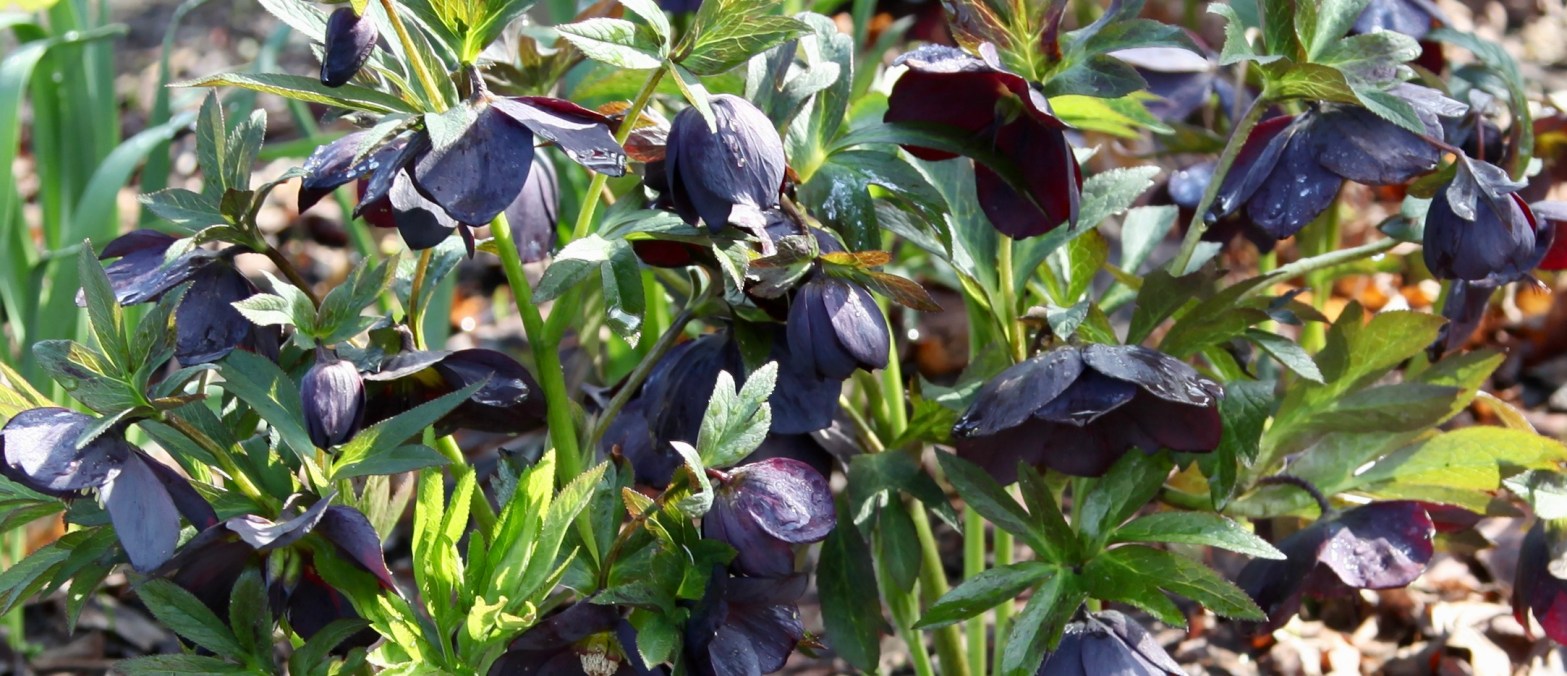
I had a couple of people reach out to ask what the ‘Black’ flower was in my last newsletter. I had to go back and dig up the list, but it is a ‘Dark and Handsome’ cultivar of Hellebore. It made me think about all the great ‘Black’ colors in the garden, and I decided to write a little about a fun design concept. I have been hammering you for a while on native plants and the broken ecosystem, so I figured a little fun relief.
When we are creating gardens, we are looking to add color in all of the seasons of the year. The hunt for pink and blue or red and yellow from Spring to fall becomes and obsession. Looking for holes in the season and trying to fill with new plants.
However, as long as gardens have been designed color combinations and isolated colors have been part of the trend. Gertrude Jekyll was the most influential horticulturist, creating with color in the garden in the late 1800s. Her work is intertwined with the impressionist painting movement in the later part of the 19th century.
I also did a piece on color several years ago, called ‘Throw Out The Color Wheel‘. Designing and choosing color is a personal experience, and while there are rules, they can be broken if that is what appeals to you.
The main point of this article goes back to the question about the black flower. Some of the most compelling and dramatic gardens are composed of plants whose flowers are devoid of color: Black and white.
You might think this boring, but white gardens can be quite dramatic, and when close to a space in which you spend time during the evening, they are enchanting in the dark with subtle lighting. My previous neighbor, a yankee, pediatrician in our town for decades, was very proud of his white border and loved having me over to show off his latest raaaare plants (use best Boston accent). You don’t have to live at Sissinghurst Castle to have a white garden, my neighbor had a 20′ long by 5′ wide border with a tree, some shrubs and a bunch of perennials.
Black flowering plants are equally dramatic, but their dark color can get lost in a garden. Additionally, many plants have dark or ‘black’ foliage and can add to the drama in the garden. Now nothing is actually black, the flowers and foliage tend to be very dark and often have a red, purple or blue hue.
Combining black and white in a garden can be very special. Black flowers and foliage with white flowers and green or silver foliage helps each ‘color’ to really pop as they are complementary colors.
Following is a brief list of interesting perennial plants to consider for flower and foliage, but it is by no means exhaustive. When you add in shrubs, you have even more options. Remember, you don’t need a huge space, but you do need to create a defined space that strictly follows these rules. This is a perfect idea for those of you who like to hit the nursery and buy new plants for projects in space that you don’t have in the garden. You’re welcome!
White Flower and/or Silver Foliage
- Anemone x hybrida ‘Honorine Joubert’ – Windflower
- Cerastium tomentosum – Snow in Summer
- Hemerocallis ‘Gentle Shepard’ – Daylily
- Iris ‘Immortality’ – Bearded Iris
- Paeonia ‘Duchess de Nemours – Peony
- Phlox paniculata ‘David’ – Garden Phlox
- Physostegia virginiana ‘Miss Manners’ – Obedient Plant
- Platycodon ‘Astra Double White’ – Balloon Flower
- Pycnanthemum pilosum – Hairy Mntn. Mint
Black Flower or Black Foliage
- Actaea simplex ‘Black Negligee’ (White Flower) – Snakeroot
- Helleborous ‘Dark and Handsome’ – Hellebore
- Alcea rosea ‘Blacknight’ – Hollyhock
- Aquilegia vulgaris ‘Black Barlow’ – Columbine
- Iris ‘Black Suited’ – Iris
- Heuchera ‘Black Pearl’ – Coral Bells
- Ophiopogon nigrescens – Black Mondo Grass
While this is a fun idea, you can also apply this to single colors. All the shades of purple with white flowers is cool and calming, while red or yellow with white has lots of energy. Color, or lack of color, can be interpreted in so many ways, but the discipline of one color can create truly stunning borders and spaces.
If you want to subscribe to my more detailed newsletter, please go to the following link: The Barker, a newsletter for gardeners in New England.
 Barking Dog Gardens - Gardening in New England