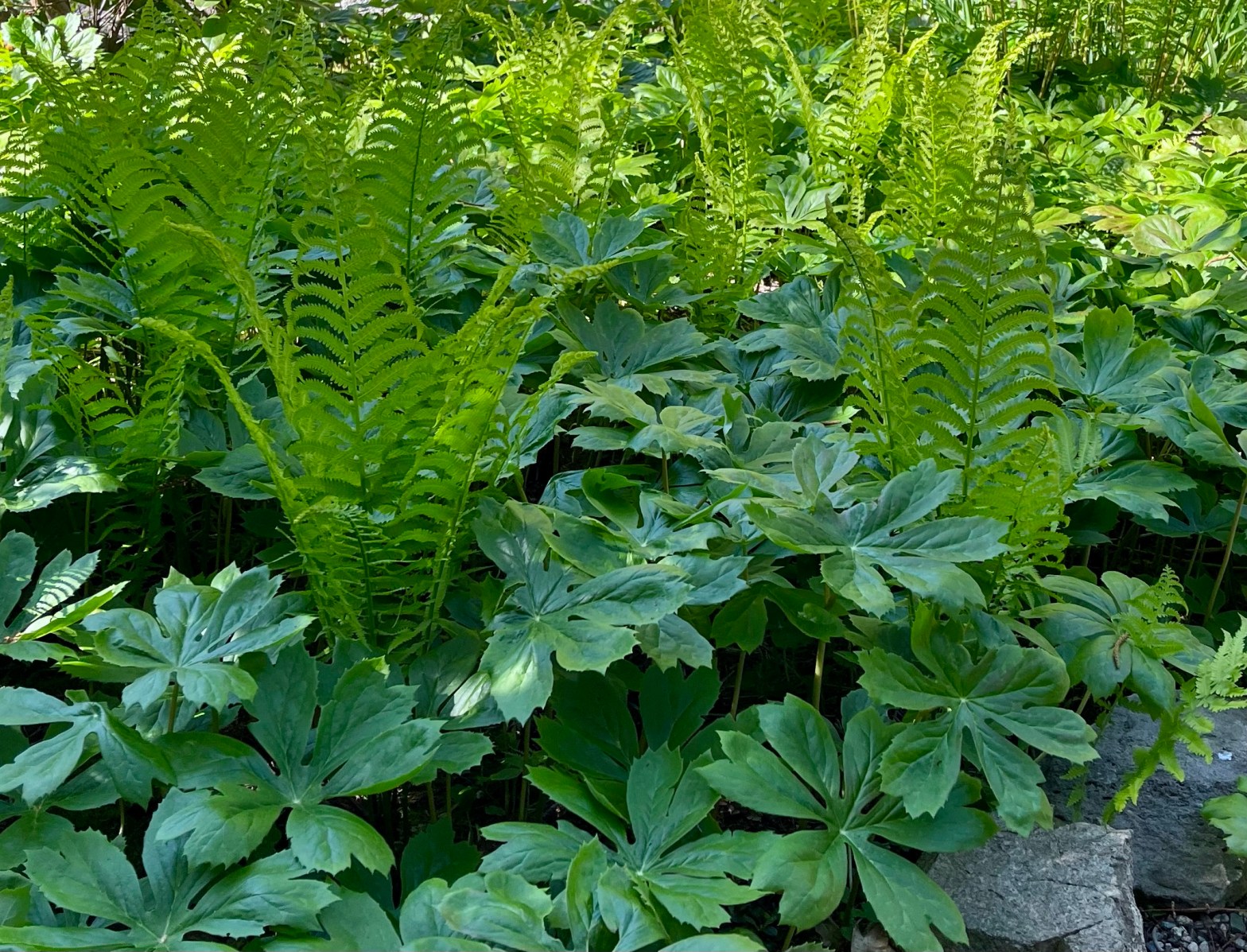
There is a lot of discussion and interest around native plants right now. I am engaged in a conversation with most clients about adding native plants to their garden, which is a great development. If you have been reading my recent posts, I have had an interesting interview and some articles on native plants and the local ecosystem.
With this there is also a lot of discussion around native, invasive, and exotic (non-native) plants. Let’s start with defining each of these groups of plants.
Native plants are those that have evolved in the local ecosystem with birds, insects and other animals. They are the familiar plants that provide their part in supporting the system by providing pollen, nectar, seeds, and host these important pollinators and insects. However there is a lot of confusion and misinformation around what is native.
Hardliners believe it is not native unless it is local to your county or specific area. To this end, the Native Wildlife Federation has a native plant finder that lists plants that are native to your zip code. Plants like Great White Trillium and Redbud are not native to Massachusetts, despite being native in many parts of New England. Many would argue that they provide value despite not being local to the state.
Oakleaf Hydrangea is often talked about as being native, and it is to the east coast, but not north of Tennessee or the Carolinas. It does provide some value, but may not be the best addition if it is your only native planting. As part of a larger planting of other natives, it can be supportive for pollinators.
When you are considering adding native plants, the major reason is to provide for our local insects, birds and animals. If you are not providing this, then what is the point. That said, it doesn’t mean that you have to dig up your whole garden and provide hyper-local native plants. Doug Tallamy, who I have discussed before, believes that gardens that are 70% native plants can fully support the ecosystem, which means that you have plenty of space for your exotics, or non-native plants. The above link goes to his page on the Homegrown National Park website. I encourage you to spend time on this site.
However, many people are not ready to commit to a full redesign in their garden. That is OK, and I often recommend that you start with a bed or section of your garden and see what happens.
We have talked about native plants and their value, so, what are non-native plants and are they really that bad. Non-native, or exotic plants, are those not naturally occurring in your area. Some may be from the south or mid-west, and may be, technically, US Natives, and many are from Europe, Asia and the rest of the world.
You may love the Korean Dogwood (Cournus Kousa), Blue/Pink Hydrangeas (Hydrangea macrophylla), or Japanese Anemone (Anemone hupehensis), but they are foreign cousins to native plants that have evolved as part of this local ecosystem and are familiar to local wildlife. Rob Gegear, in a recent interview that I did, talked about non-native plants providing poor quality nutrition (Fast Food) that does not properly support the ecosystem. Rob would argue that these non-natives are keeping important pollinators from doing their work on the native plants, but other experts say that the insects will ultimately find the plants they are supposed to visit.
Finally, invasive plants are a non-native plants that, when added to an environment, will dominate other plants and crowd out important native plant communities. By definition, a native plant cannot be invasive, but there are plenty of native plants that are very aggressive and can dominate an environment.
Check out the Mass Audubon booklet on Massachusetts Invasive Plants and their other resources. Japanese Knotweed, Burning Bush, Barberry, Black Swallowwort, Norway Maple, Multiflora Rose, Buckthorn, Black Locust, Garlic Mustard, Bittersweet are some with which we are quite familiar.
Invasive plants are very different from native plants that are aggressive. Aggressive native plants can dominate, but provide valuable service to the ecosystem as opposed to the invasive plants: Virginia Creeper, Morning Primrose, Violets, Milkweed, Jewelweed, Golden Rod, Mountain Mints and others can be bullies but add real value to the ecosystem.
It is important to understand these differences and know what to expect from plants when you add them to your garden. Are they beneficial and servicing the local ecosystem or harmful. Ideally we want to add local native plants, but if we add non-natives, to make sure they are not harmful to the environment. If you notice non-native plants that are spreading or seeding aggressively in your backyard, consider replacing them. Even Vinca and Rose of Sharon may end up on the invasive plant list at some point.
 Barking Dog Gardens - Gardening in New England