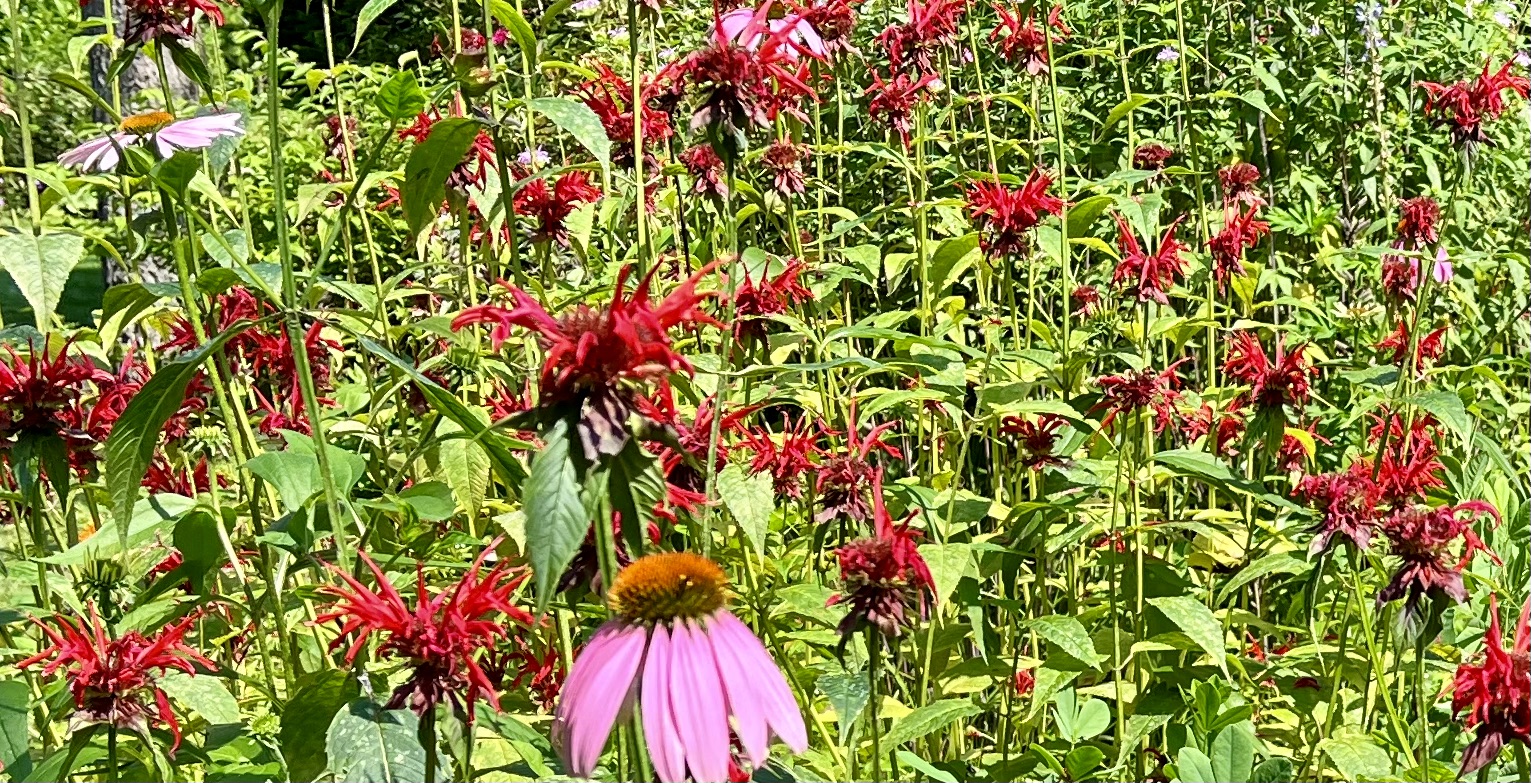
During the late-Winter of 2021, I wrote a piece on Van Berkum Nursery, a wholesale nursery based in southern New Hampshire that propagates a broad range of perennials. Their founder’s DNA, Leslie and Peter Van Berkum, is rooted in native and woodland plants, so I reached out recently to John Gedratis, the current nursery owner, to ask about the trends and growth they are seeing in native plant demand. Here is a link to their plant database, you can click the box on the bottom to see their native offerings for reference. Please remember they are a wholesale nursery, so work with your designer or contractor to source their plants.
In my experience, the last several years have been transformative in the number of clients who want to incorporate native plants into their gardens. People are starting to understand that a garden with native plants doesn’t mean ugly and unkempt, but that they can be beautiful, full of texture, color, fruit and seeds, and an abundance of wildlife and beautiful insects. That these native gardens support a much broader ecosystem is a driving force for some or an added benefit for others.
I asked John about some of the new developments at the nursery, and he was excited to talk about the new moving production line that allows them to pot up more plants during the bottleneck time in Spring, when there just isn’t enough time in the day to get the work done. This allows them to focus more on caring for plants in the field.
He also discussed the huge popularity of their recently introduced ‘local ecotype’ plant program. Basically, this means that plants tagged local ecotype, or LE, are plants grown from seed sourced locally and therefore have genetically distinct traits from those grown in other geographical areas. They may have evolved a greater cold hardiness, adaptability to heat or different soil, etc. While most people may not know the difference, it is considered best to have native plants with similar genetics to the native population in New England, rather than having seeds brought in from Minnesota or Virginia. Sometimes, it is important to be even more specific on projects and source plant with an even more local genetic strain.
In the grand scheme of things, adding plants native to your state or region is the goal, if they can be genetically similar, then all the better. When working with your contractor or designer, ask them to source ‘local ecotype’ plants where possible.
We spent a lot of time talking about plants and where they have seen the most growth. In recent years they have added some growing space in a new field to expand their inventory. They have grown in recent years, and with their native plants they have seen explosive growth. Native only nurseries, designers, and contractors are driving this, and the bigger nurseries are trying to figure out how to best handle the demand for native plants. As you all know, many nurseries just haven’t fully committed to this yet. Keep asking for native plants at your nursery.
With the ephemerals, that I talk about later in the newsletter, he says they sell out of them every year, but they have seen incredible demand for their native offerings. As a nursery rooted in native and woodland plants, this is very exciting for their employees, as it aligns closely with their values as a community. They are passionate growers and lovers of plants.
I asked about some of the more popular and ordered plants, and following is a brief list that you can search for through the above listed link to their catalog:
- Monarda fistulosa (Bee Balm)
- Fragraria virginiana (Virginia Strawberry)
- Dennstaedtia punctilobula (Hay-Scented Fern)
- Agastache foeniculum (Anise Hyssop)
- Penstemon hirsutus & digitalis (Beardtongue)
- Pycnathemum muticum, virginianum & pilosum (Mountain Mint)
- Lobelia cardinalis & siphilitica (Cardinal and Great Blue)
- Solidago many species (Goldenrod)
John says that they are growing huge numbers of both Lobelia species. The Mountain Mints have become popular with his favorite being P. muticum. The Penstemons are also moving with his favorite being P. hirsutus. He also says that the Goldenrods (Solidago) do well being such a great pollinator plant but it seems to be a harder sell. I suspect people are familiar with the messy Goldenrods they see in the wild and don’t realize many have wonderful ornamental qualities too.
If you remember from my discussion with Dr Rob Gegear from a few months ago, Monarda and Penstemon are two of his top choices for feeding important pollinators.
We also spent some time on the topic of natives and cultivars, which are improved forms of native plants, as well as hybrid gardens with native and non-native plants. We are both in agreement that making the shift to more native plants will benefit the ecosystem, but that perfection is not required. Having some non-native or favorite cultivars of native plants mixed is an improvement over current non-native gardens. Rob Gegear might disagree, as he believes that we need to support the growth and health of the pollinator ecosystem, and non-native plants can take away from this system working effectively. Doug Tallamy in his efforts believes that incremental change in the aggregate will effect great impact on healing the ecosystem.
Dig up your whole garden, remove your lawn and go in 100% or make some small adjustments to work in native plants where you can. It’s all good as long as we can all start to make some changes. Most importantly though, please work to eliminate herbicides and insecticides in your garden. If you do start adding native plants, add yourself to the Homegrown National Park database and ‘get on the map’.
Van Berkum provides plants to nurseries, contractors and designers, and are starting to get a lot of orders from local municipalities and governments. You will find their plants at the big nurseries like Mahoney’s and Weston, as well as our small native only nurseries like Blue Stem Natives and Prickly Ed’s Cactus Patch. If you are working with a designer or contractor, request that your perennials come from Van Berkum. You will never be disappointed with their quality or the way in which they have been grown by passionate plants people.
 Barking Dog Gardens - Gardening in New England