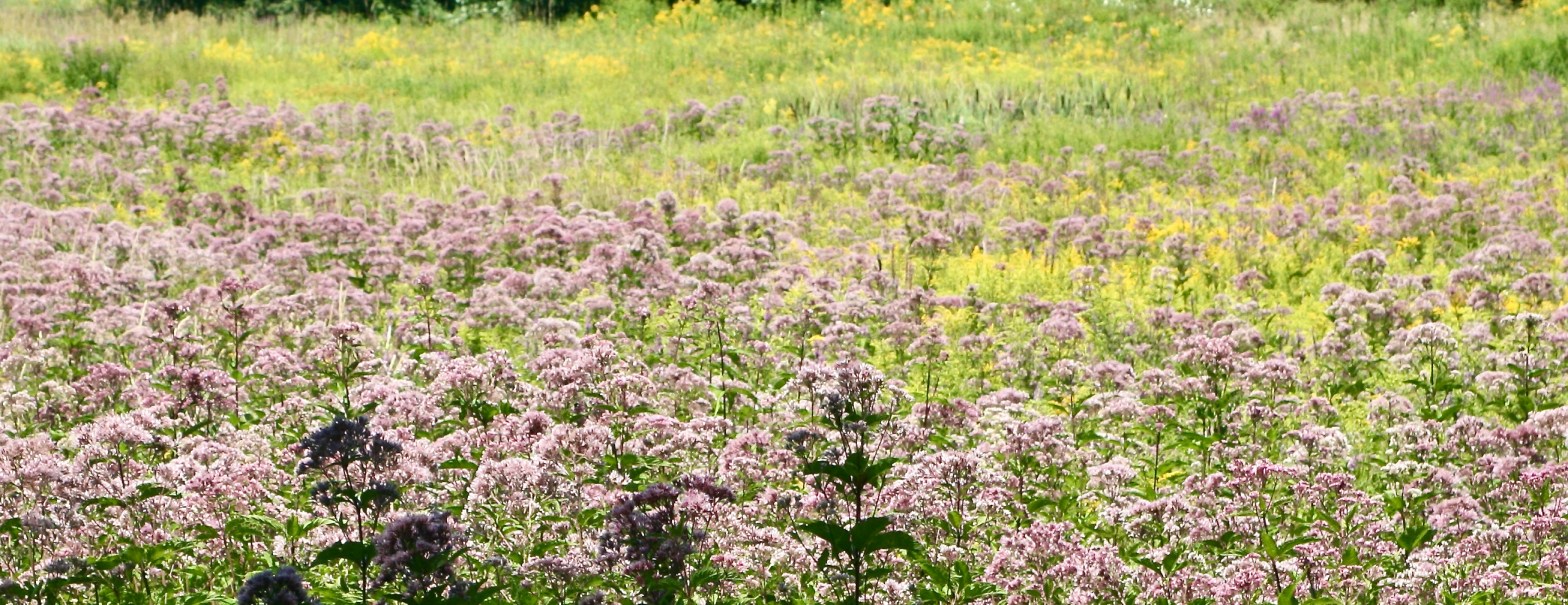
I hardly meet with a client now who doesn’t ask about native plants, and it is exciting that people want to start planting some natives. However, plants are just part of the whole picture, the ecosystem, that is a space in which plants, animals, insects, and microorganisms interact with each other. Following is a series of links and topics so that you can watch, read, learn, and research about why and how to create a healthy ecosystem in your garden, neighborhood and region.
We, humans, are often the reason that our systems are out of balance. As an example, I wrote about rabbits last summer and their overpopulation. A contributing theory is that we have introduced poisons into the system to control other varmints, and this poison has gone up the food chain to kill the predators of rabbits, thus leading to their overpopulation. Healthy ecosystems will heal and self-correct.
If you want to create a small pollinator garden or dig up your whole property, it is important to understand the big picture. Why are you doing this and what can you expect as a result? Also, as I have said many times in previous newsletters, it all starts with the soil.
I encourage everyone to watch the Biggest Little Farm Movie, as it does an excellent job explaining concepts like biodiversity and ecosystems within a wonderful story of a young couple starting from scratch on a 200 acre farm. I promise you that this is not some piece of propaganda, but just a true story of a family with good intentions and lots of animals!
If you don’t tear up when the outcast chicken, Greasy, finds friendship with the pig, then you’re not human! It also has a dog named Todd and a pig named Ugly Betty. It’s just a great story and can be found on Verizon, Comcast, Prime and Apple TV. An important takeaway is that it isn’t always easy, and that the best outcomes usually take some time for the systems to find balance. Very much the same in our smaller gardens that can take years to establish and find their own balance. The farm in the movie, Apricot Lane Farms, has its own website and is a tremendous success.
I think one of the best initiatives right now is Doug Tallamy’s Homegrown National Park. His goal is to create 20 million acres of diverse native habitat by combining the efforts of everyone working to make improvements. The website is a tremendous opportunity to learn about the importance of native plants and biodiversity. I have talked about Doug Tallamy before, and one of his best books is, Bringing Nature Home. Spend some time on the site and look through their resources. Everything is there to help you plan your own next steps. If I could get half of you to sign-on, we could have an impact in the New England region.
I often wonder what impact I can have as one person with a small yard, well, Tallamy’s initiative shows how our combined efforts can have an impact with combined habitats and pollinator pathways.
On a more local level, some handbooks have been created recently that help resident’s plan, install and maintain sustainable gardens. These were both part of a larger initiative and tailored to the local towns. Winchester is a little more suburban while Concord has some more rural elements.
Sustainable Landscape Handbook (Winchester)
Sustainable Landscape Handbook (Concord)
These can help you through all the steps to create more sustainable gardens and ecosystems. Of course, I am always here to help, as it can get overwhelming.
Finally, if you are a learner and want to take classes and workshops, there are plenty of local opportunities to learn about native plants, biodiversity and ecosystems.
Mass Horticultural Society
Native Plant Trust
Grow Native Massachusetts
This is a lot of information to digest, and maybe we will have a snowy February to allow you to dig in and find the information that will be helpful for your needs. If you do nothing else, watch the movie. It is a great story and really encapsulates the idea of self-sustaining ecosystems and biodiversity without preaching. If you’re more of a book person, then try Doug Tallamy’s book.
 Barking Dog Gardens - Gardening in New England