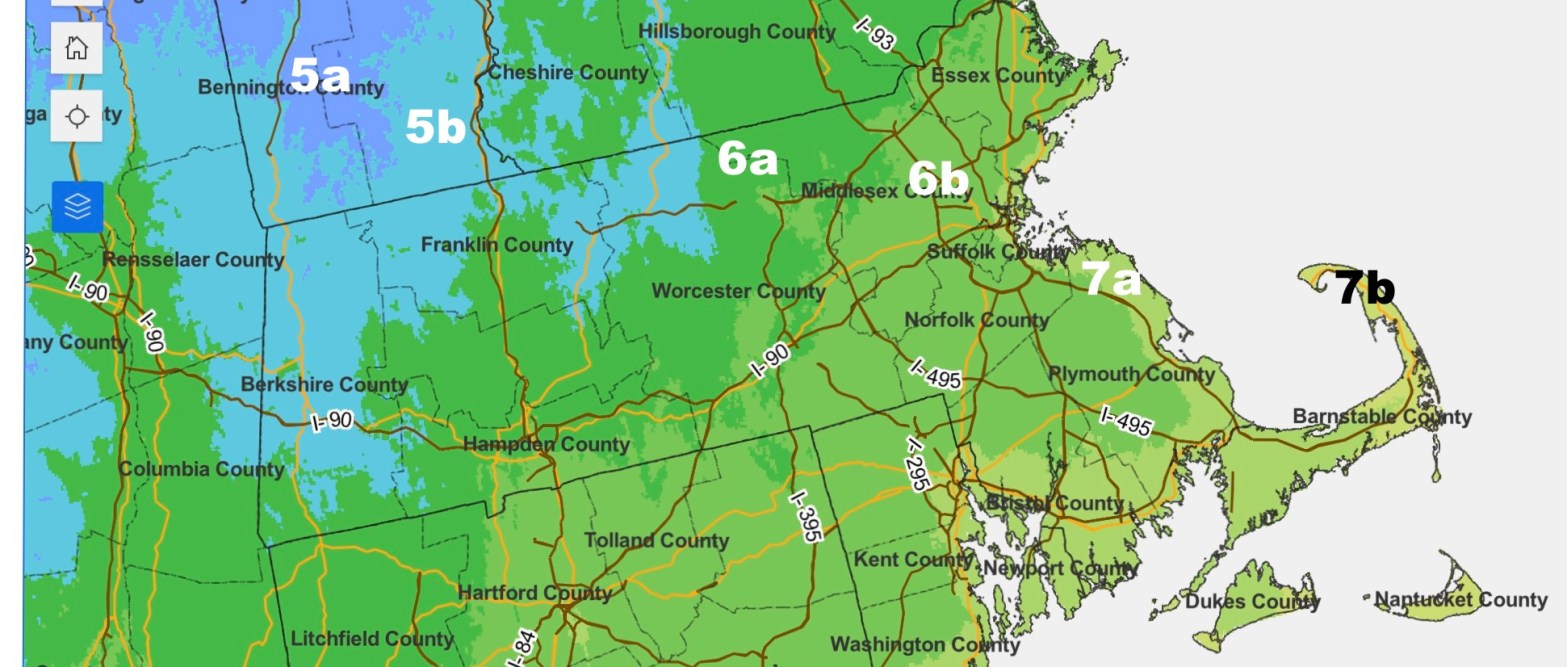
The new Plant Hardiness Zone Map is here, the new Plant Hardiness Zone Map is here!
2023 USDA Plant Hardiness Zone Map
You have probably been seeing this image during the fall, as the 2023 map was released. Lots of people have been writing about it, but I find few are actually talking about how to directly apply it to your garden and plant choices. Bookmark the website as it has tons of great information beyond that which I will discuss here.
The map, very simply, is the average of the low temperature for the past past 30 years. It doesn’t matter if you hit -10ºf for an hour or held it for 10 days or hit it ten times during a Winter. It takes the single lowest temperature of the Winter and averages it to the 29 others in the 30 year time window. Lots of people use this to talk about climate change and the warming world, but it is not the most accurate measure. They talk a little bit about the difference between ‘Climate’ and ‘Weather’ on the page.
The big takeaway from this 2023 edition, which measures from 1991-2020, is that much of the country went up half a zone (5ºf), with several of the cooler regions moving up two zones (10ºf). Here, inside Route128 in Boston, I went from 6a to 6b in 10 years, meaning the average annual low temperature was between -5 – 0ºf, up from -10 – -5ºf. 23 years ago when I moved back from California, we were close to Zone 5.
This new map is far more sophisticated due to the massive increase in digital data points included and the ability to search down to the zip code. Software is used that helps to smooth out weather reporting differences and inconsistencies. It really is a marvel of the digital world to create a resource like this that is providing detailed and real information. But, as gardeners, you probably know that your garden can be different than a friend’s on the top of a hill or in the hollow. There are micro-climates in neighborhoods and even your own garden. Use the map, and its detailed data as a guide and interpret for your own garden.
Interestingly, we would look at last Winter as one of the warmest on record, with several very warm spells in January and February. I was pruning in shorts and a t-shirt, but that might be more an indication of my own challenges. We had only a couple of days in the single digits, and we had one 24-hour period where the temperatures dropped to -10.7ºf on my weather station. In ten years when they come out with the next map, the number for 2023, averaged into the 30 year total, will be -10.7º, which in no way reflects the winter that we had. While it is clear, we are in a significant warming trend, just look at this map from Blue Hill Observatory, extreme weather, which is a part of climate change, can significantly impact a map like this.
So, how do we apply this map to our own gardening?
When you buy plants, you will see a hardiness zone attached to the tag or if you research them online. I live in zone 6b, meaning that I can grow plants that are hardy in zone 6 and lower. Many of the plants we grow in containers, and call annuals, are hardy in higher zones like 8,9 or 10. They might be perennials in Southern California, but they are annual here and can only be grown during the warmer months. A favorite annual in New England called Lantana, grows like perennial, woody bushes in California.
The danger of relying on these maps was evident with last year’s cold snap in February. The temperature went down to 5b hardiness in my area, if only for a night, and led to a lot of plants suffering, not flowering in the Spring, and many new plants dying. Part of this was due to the low temperature, but it was also related to how quickly the temperature dropped from much warmer temperatures. Plants like to adapt to the cold temperatures gradually, instead of overnight, which can cause problems. If you had new or relatively new plants in the ground that weren’t well insulated, they suffered and even died, even if they were appropriately zoned. Well-rooted plants have the ability to withstand cold temperatures as their deeper roots will not feel short-term temperature changes. This is why a hardy boxwood in a pot might die over the Winter, but it will do fine if planted in the ground.
If you want to use this new map as an invitation to look for new plants that have higher zone hardiness, just realize that you may need to provide more protection in the Winter until they are well established. However, do realize that if we are going to have more erratic weather, like last Winter, that matching your plants to your zone may not be any guarantee of their survival without some help in the beginning.
25 years ago my area was on the edge of Zone 5 and plants were used to the colder lows. A great example of this challenge is the ubiquitous Hydrangea macrophylla. These blue/pink flowering beauties have proliferated over the decades in zones 5 and 6. The plants are often hardy to even zone 4, but they only reliably flower in zone 7. If you have been to Cape Cod in the summer, you see them in their perfect environment. Zone 7 with mild winters from the Ocean that minimizes late Spring frosts and low temperatures that damage flower buds.
The great fraud is that New England Nurseries bring these plants in by the truckload from nurseries in much warmer zones and they are covered in flowers that many will never see again. The Endless Summer variety was a natural adaptation from plants being grown in Minnesota, where they learned to flower on new wood instead of the old wood. A multi-billion dollar windfall for those involved because someone spotted a natural evolution of a plant. If you have flowering challenges, learn more about your plants and how they flower. Plants that flower on new wood, often don’t have the challenges of old wood plants in New England. Basically, if a plant is old wood flowering, it holds its flower buds over the winter on the previous season’s growth, making them susceptible to Winter weather.
While the new map is a revelation, especially when you look at the past two editions, it is no guarantee that your location will reflect its hardiness zone in any given year. If you want to push the edge, as we always want to do, just be prepared to provide some protection for new, marginally hardy plants as you try to get them established and less susceptible to damage. Luck can often be the deciding factor whether a plant will survive or die.
 Barking Dog Gardens - Gardening in New England