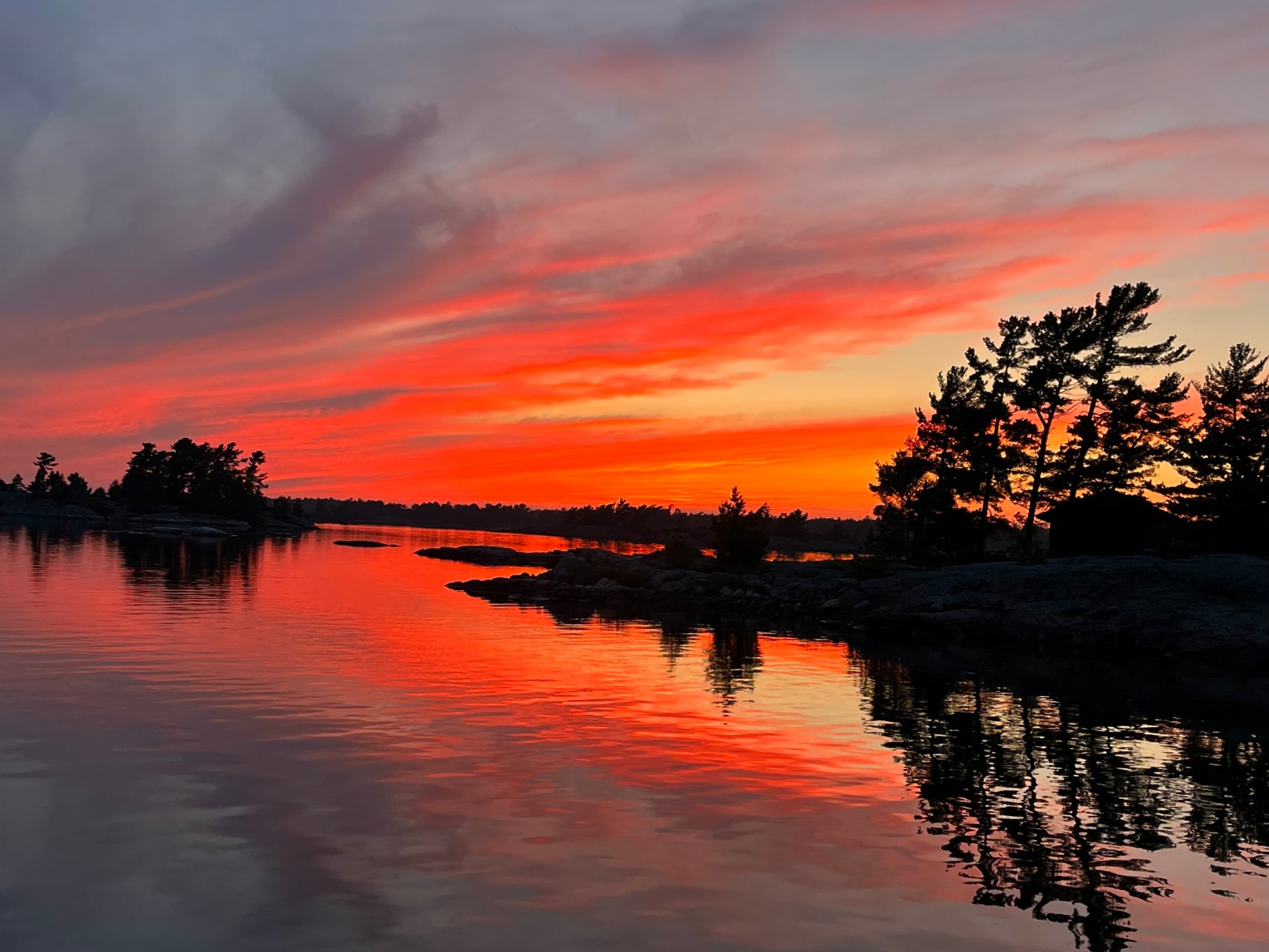
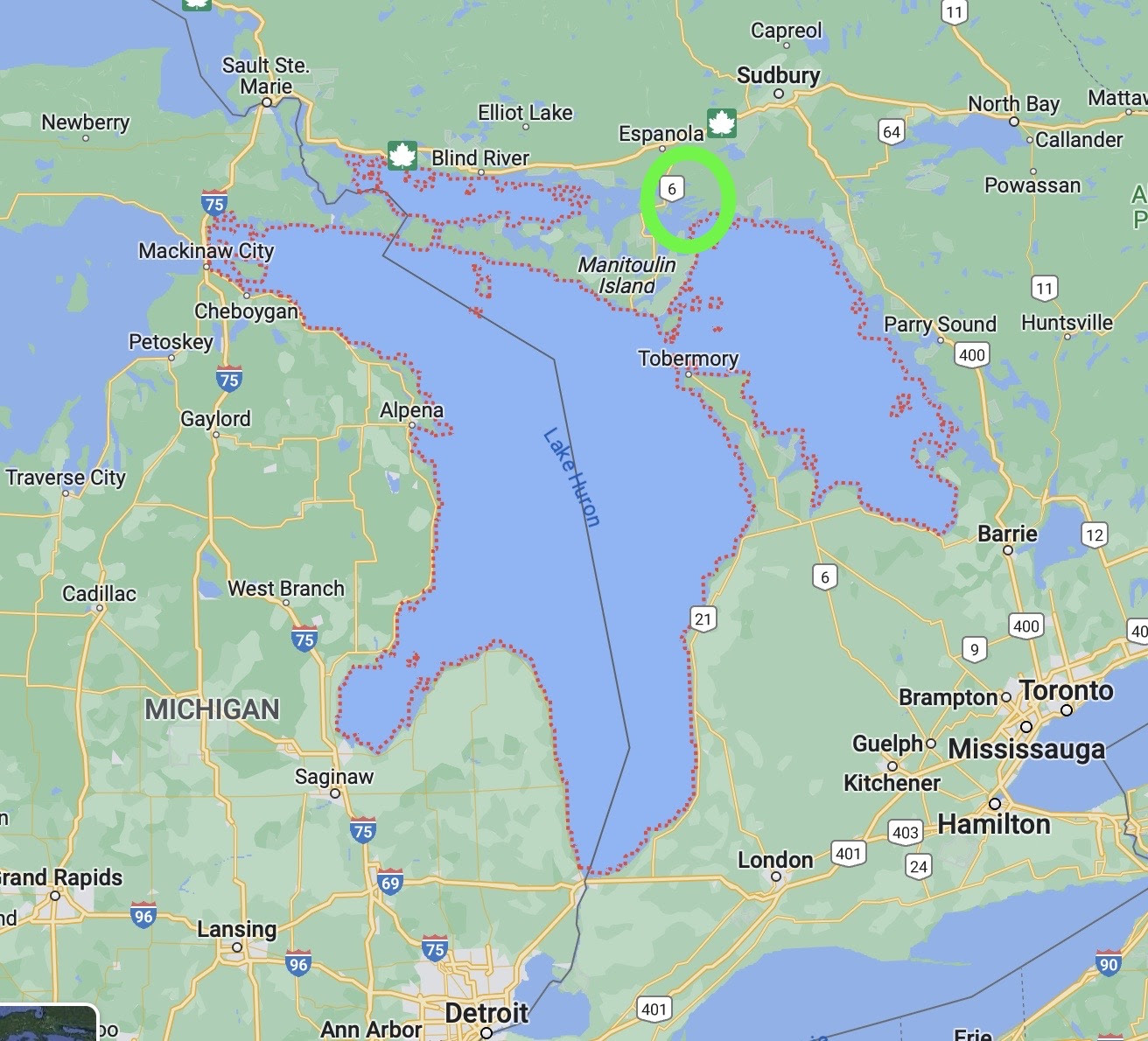
Every year that I come to this amazing and remote part of the northern Great Lakes, I am amazed by the diversity of plants and their resilience to survive harsh Winters and challenging conditions. We are on an island in the Georgian Bay, which is the northern part of Lake Huron in Canada. The picture above is not edited, but the orange and red are so intense from the haze of wildfire smoke that blocks the blue light and intensifies the red light waves.
This whole area is one large chunk of granite, and each of the islands that formed is also just a large outcropping of granite. For millennia, small bits of organic matter and seeds would get deposited on these islands and small plants would grow. Then larger plants would grow and they would leave more organic matter, until there was enough to support early species of Birch or Pine. After many cycles of growing and dying, enough organic matter would build up to create a layer of soil. The mulch everywhere is pine needles, as you can see. I wish I had my meter as the soil pH is probably around 4.5. Way too acidic to grow good vegetables, which is why my friend typically grows in a raised bed with potting/garden soil.
Every tree basically roots into cracks in the granite, and that is what helps to keep them stable in the strong winds that come across the lake. If these native plants can grow here, they can grow in your garden, and in taking a cue from nature, often native plants don’t thrive in our rich and maintained gardens, because they get to much love. You may notice that some plants get too big and flop from the conditions that are just a little too luxurious. Fertilizing and amending soil for native plants can often lead to bigger and weaker plants.
This area is the equivalent of zone 5a, which compares to northern Vermont and New Hampshire. All of the following plants are hardy in our 5, 6, and 7 zones.
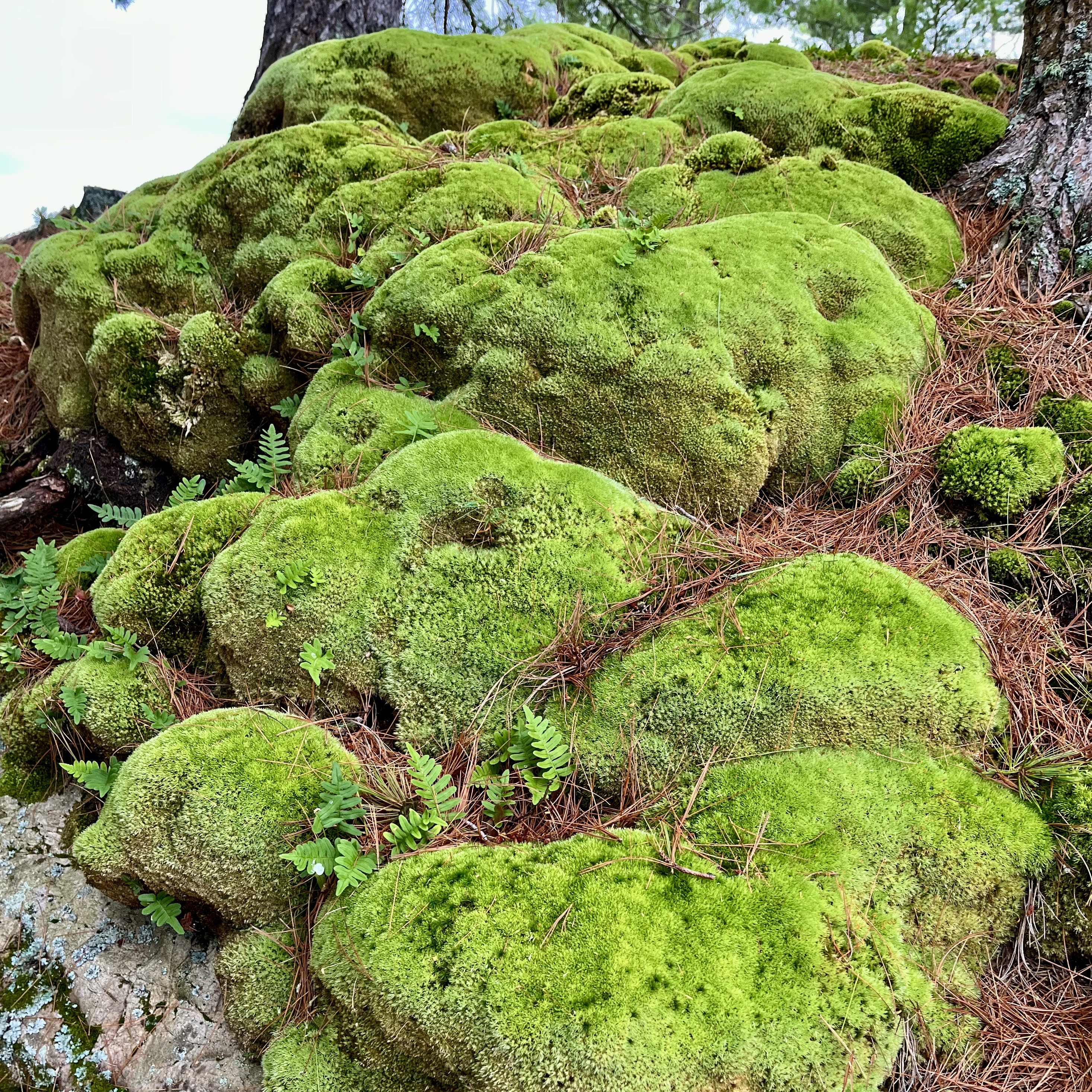
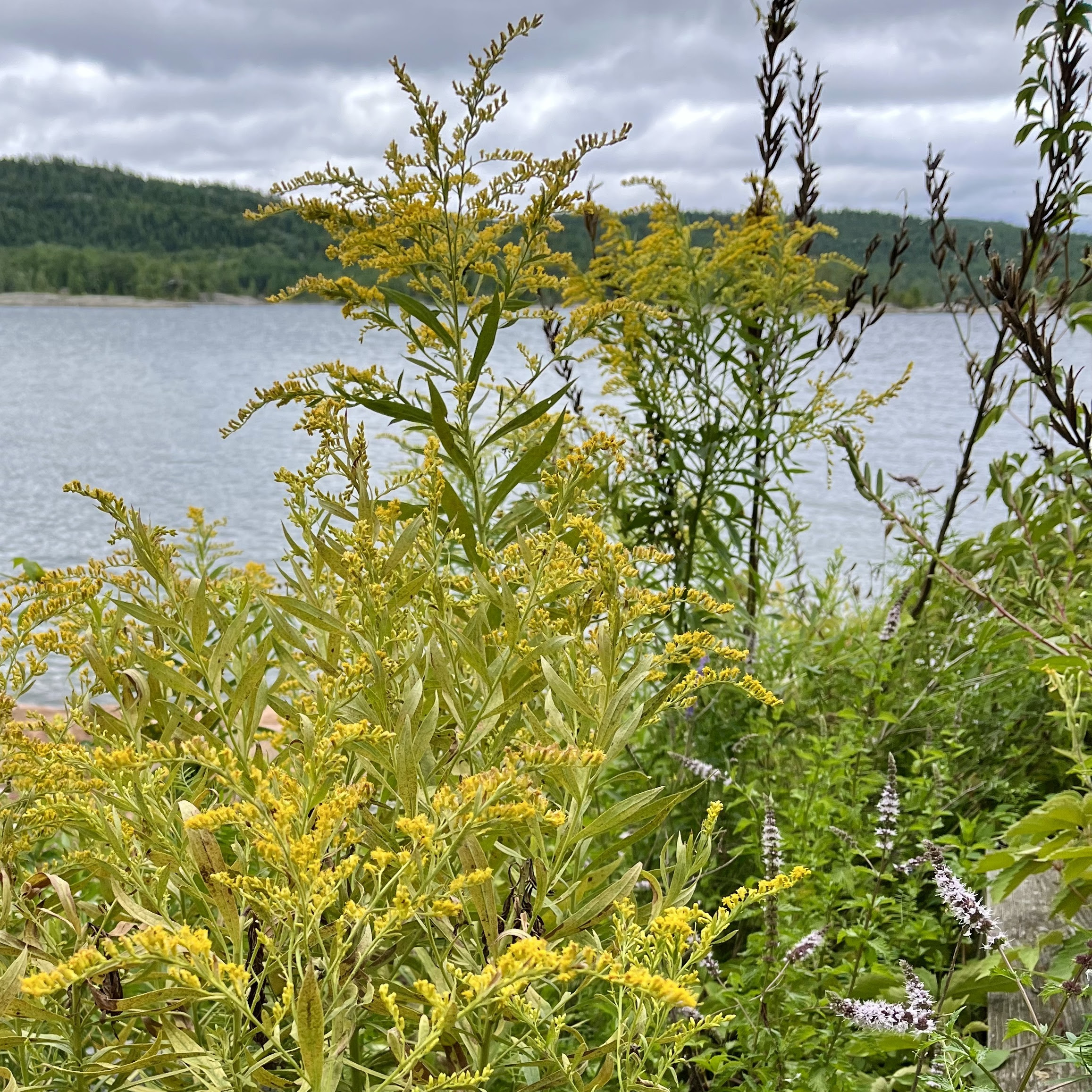
Cushion Moss (Leucobryum glaucum) first with Goldenrod (Solidago sp.) second. Cushion Moss, and many mosses, are prevalent in these acid soil conditions in the shade. This patch is probably 10′ long and 6′ wide and has been growing for a long time, think many decades, if not longer. It collapses under foot pressure, so we have to be careful not to step on or disturb. With rain, it will have this beautiful bright green color and seems to do best attached to rocks. I am not usually here so late in the season, so it is nice to see the many species of Goldenrod as they move in the constant breeze in sun to part shade.
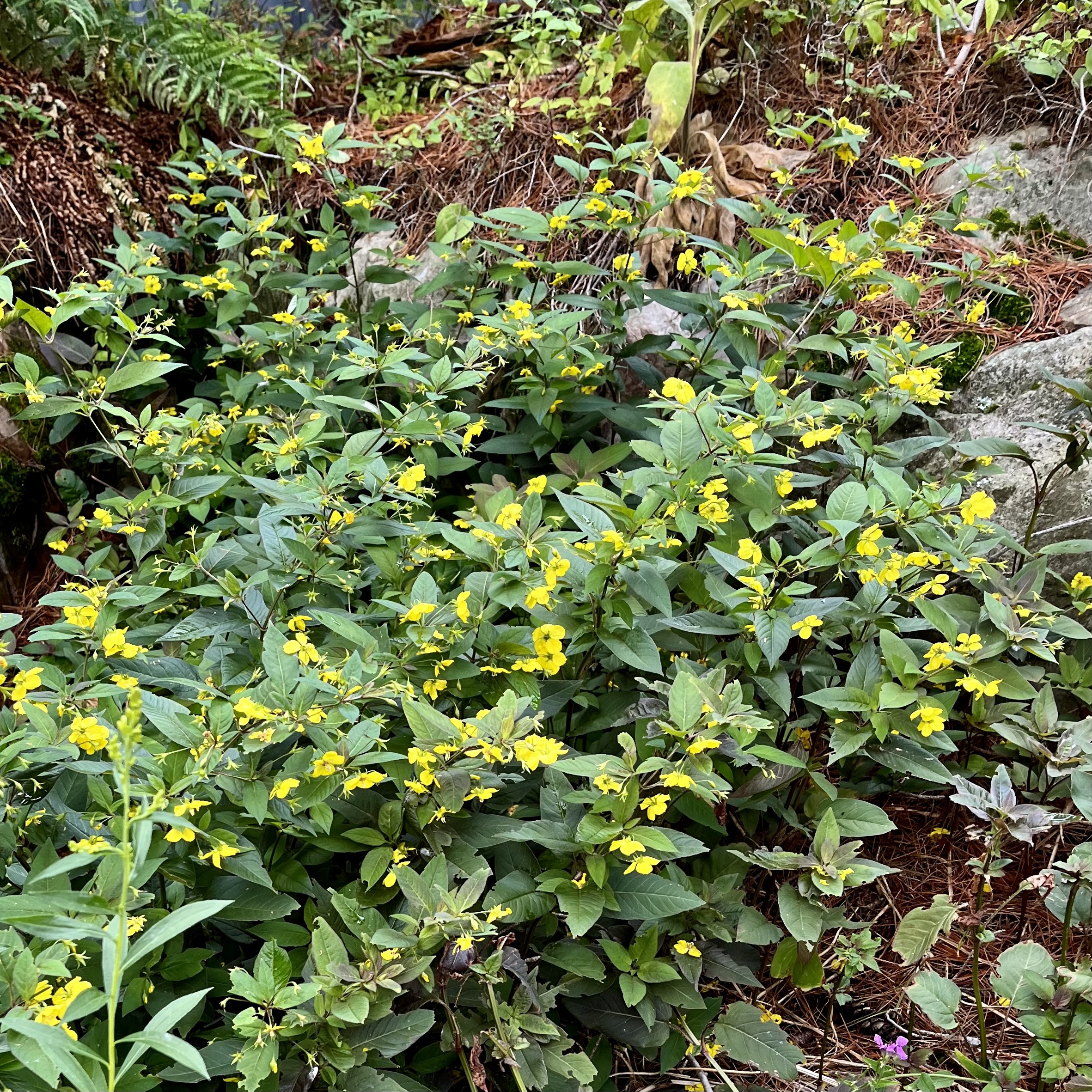
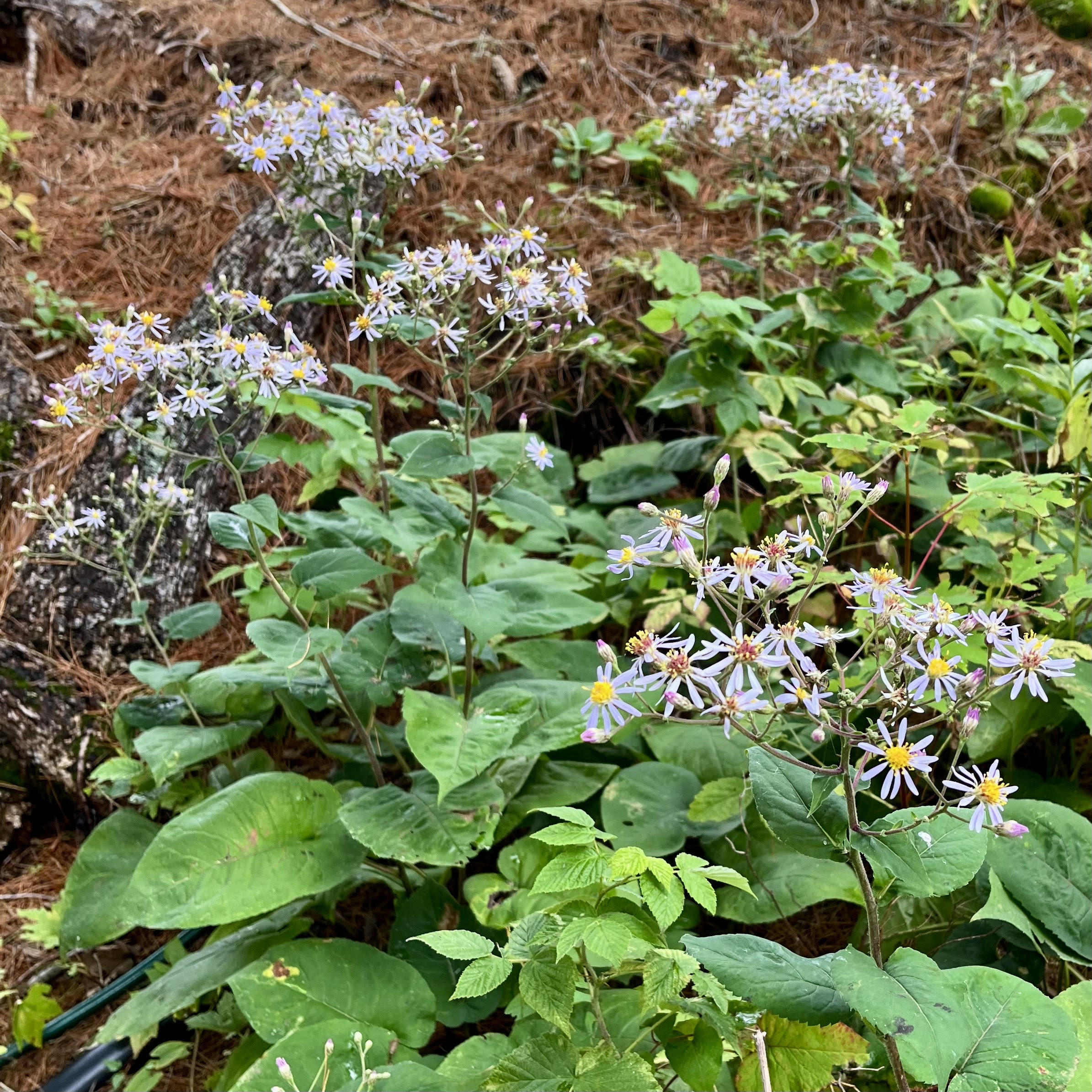
Fringed Loosestrife (Lysimachia ciliata) first and Big-Leaved Aster (Eurybia macrophylla) second. This Loosestrife species is a great ground cover for shade to moist sun, but likes moist soil. We have many great Loosestrife species, despite the bad reputation of the invasive Purple Loosestrife. The Aster is a classic woodland plant in the shade with moist soil that has a nice dense foliage that can work as a ground cover too.


Tawny Cottongrass (Eriophorum virginicum) is a sedge and a valuable food source for animals, with the cottony seeds as a food source for birds late in the season. Very cool to watch sway in the wind. On the other extreme in the shade is a fun plant called Interrupted Club Moss (Spinulum annotinum), which we see in our local wet forests too. Sometimes people mistake them for little pine trees, but in fact, it is a moss. So often, we are looking to create big and noticeable gardens, when the subtlety of mosses, that we see a lot of in Asian gardens, can be just as beautiful.

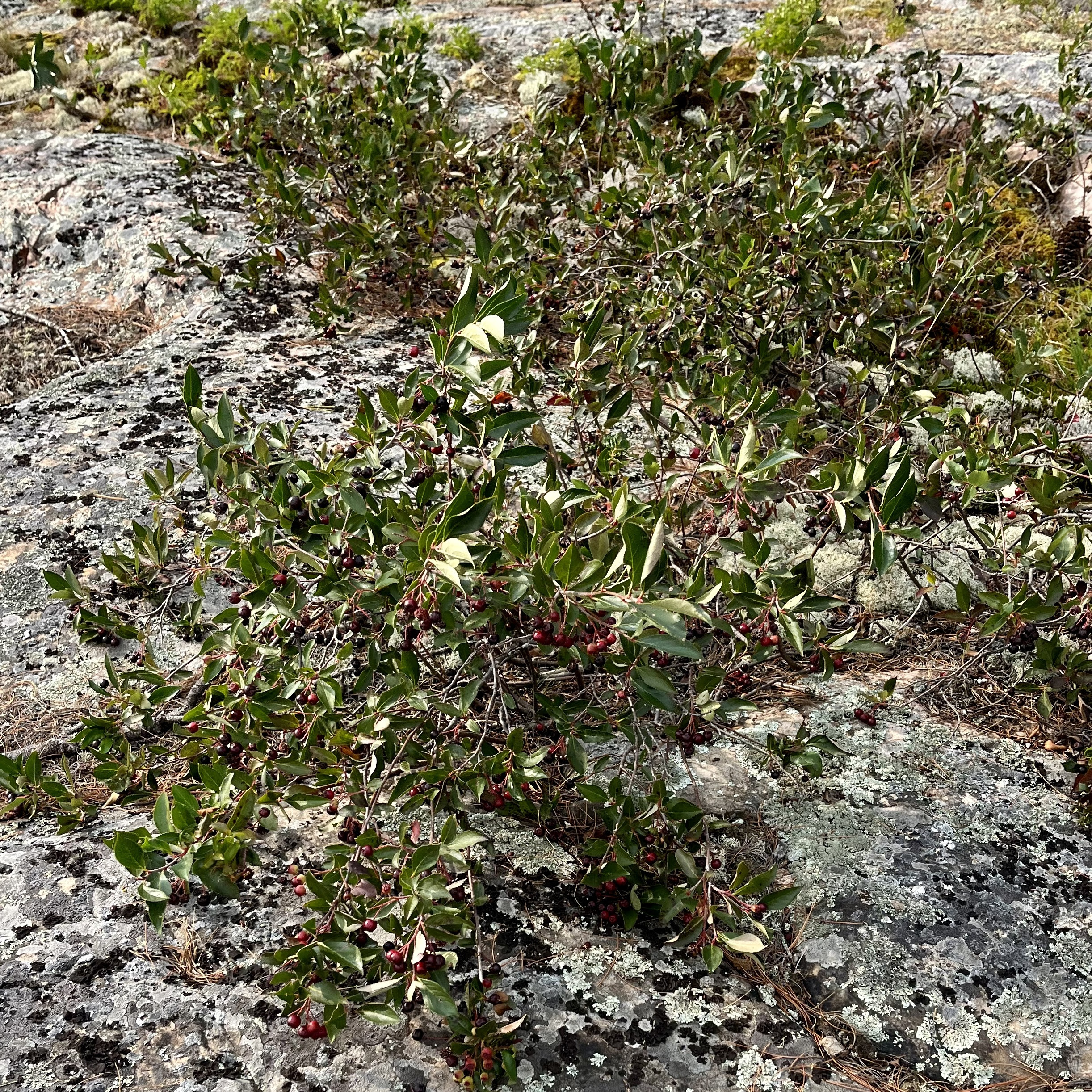
On the waters edge is a large mix of Boneset (Eupatorium perfoliatum), Goldenrod (Solidago sp.), and Blue Vervain (Verbena hastata) that grow in the rock on the water’s edge. Stunning in its natural, and resilient, beauty. Speaking of resilient is the Black Chokeberry (Aronia melanocarpa) growing right out of a rock. No soil needed, but it explains its prostrate and dwarf growth. All of these prefer full sun but can take some shade too.
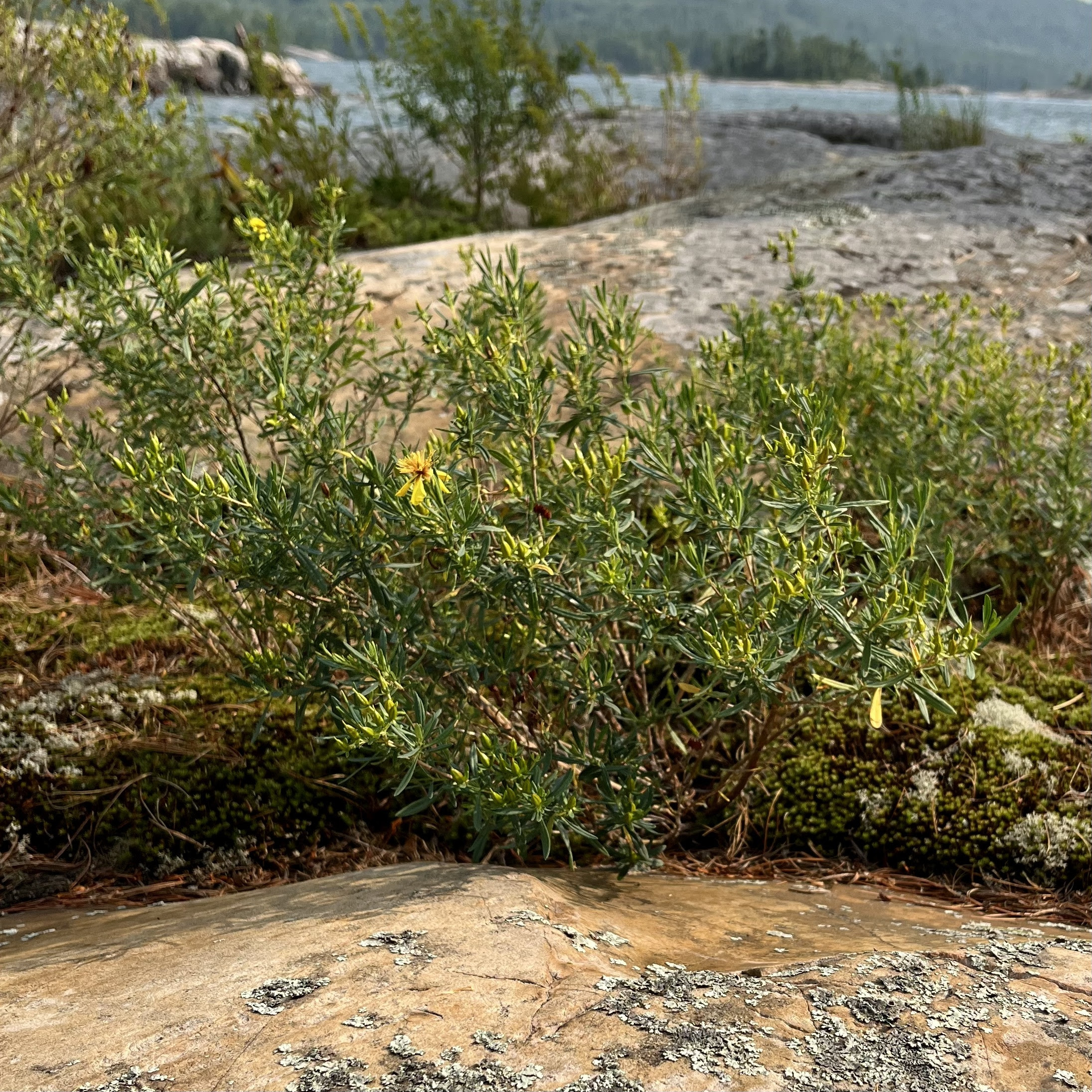
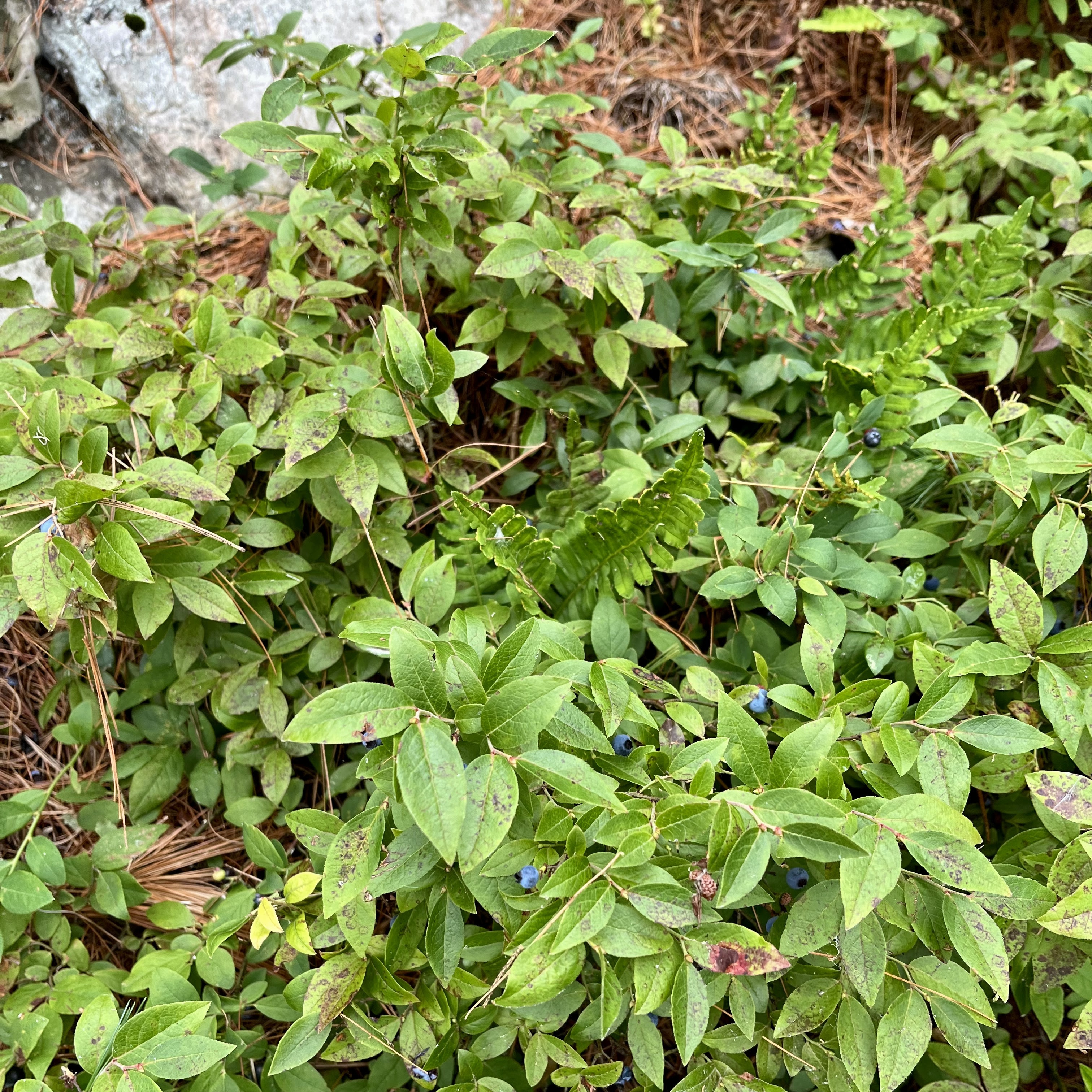
Shrubby St John’s Wort (Hypericum prolificum) growing out of a rock crack that is filled with Moss. Great pollen producing plant that attracts insects that feed the birds, and then the seeds feed the birds through the Winter. Part of that interwoven system of plants, insects, birds, and animals that I have discussed in the past when covering the importance of biodiversity. Finally, on the right, my last plant is the ubiquitous Lowbush Blueberry (Vaccinium angustifolium). This is big business in this part of Canada and locals are always off in the woods harvesting berries to sell on the road or in markets. These thrive in the very acidic soil and under the pine trees. They are, quite literally, everywhere. The defining ground cover in Ontario.
 Barking Dog Gardens - Gardening in New England