Phenology, as simply defined by Merriam-Webster, is a branch of science dealing with the relations between climate and periodic biological phenomena (such as bird migration or plant flowering.) Growing Degree Days (GDD) is a tool used in this study that calculates the accumulation of warmer temperature days over a season. In the field of horticulture and your gardens, this tool correlates to specific moments that a plant will flower or an insect will hatch.
I will be tracking the GDD for my 6b zone this year in the Weather Fore and Aft section, and it is calculated with this simple formula:
((Daily High Temp in ºf) + (Daily Low Temp in ºf) / 2) – 50 = # of GDD
For example, last Saturday, we had a high of 66.7º and a low of 43.2º. The average is 54.95 and by subtracting 50, I get 5 GDD. What does this mean? It says that the average temperature was 5 degrees above 50º for the day and that this provides an impetus for plants to start and grow. Over the Winter the average rarely gets above 50º so plants lie dormant, but when we start to accumulate these GDD, then the weather is telling plants to wake up. Not all plants wake up or flower at the same times, so we have resources that tell us, based upon GDD, when plants and insects flower and hatch. In the Spring we accumulate these GDD sporadically, so it seems some years that things awaken and then sit for a few days or a week until we accumulate more GDD. Every day that we accumulate GDDs we add them to the total of all previous days and end up with the current number. In the Spring, on a pleasant day we might accumulate 5 or 10 GDD, but in the summer we can accumulate 30 or 40 GDD in a day.
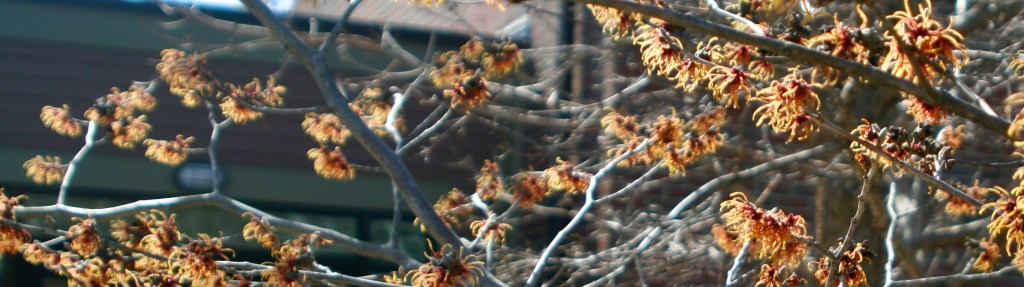
The Cornelian Cherry (Cornus mas) started flowering just in the last few days. Its first bloom occurs at 40 GDD. Red Maples are in bloom as they start at 44 GDD, and Star Magnolias will be in bloom by the end of the week at 83 GDD.

As I said earlier there is always variation based upon subtle difference in local micro-climates. This tool helps us to understand why flowering comes slowly in the Spring or all at once. If we were to get 3 or 4 days in the mid-70s with nights around 50º, then all of a sudden we would accumulate GDD and have Forsythia, flowering Pear, some flowering Cherry, PJM Rhododendron, Saucer Magnolia, Serviceberry, Crabapple and more flowering at once. And these warmer days will shorten the flowering time too.
So when it comes to Spring, I love it when we don’t get those big temperature spikes over a number of days and flowers slowly open, because, when we get big spikes, it really throws a wrench in the flowering times and duration of these early flowering shrubs and trees. Check out the weather section for GDD tracking and plants flowering.
 Barking Dog Gardens - Gardening in New England